

You want whiter teeth, but you’re not sure if you should buy a kit at the store or visit a dentist. The choice can feel confusing with so many products promising bright results.
Understanding what actually works, professional teeth whitening vs at home can save you time and money.
Professional teeth whitening uses stronger whitening agents and delivers better results than store-bought kits, especially for stubborn stains.
Store-bought kits can lighten your teeth by one or two shades, while professional treatments offer more noticeable changes. The difference comes down to the strength of the whitening product and how it’s applied to your teeth.
Your smile is important, and picking the right whitening method depends on your goals and budget. Store-bought products are convenient and budget-friendly but tend to deliver modest results.
Professional options cost more but give you supervised care and stronger results that last longer.
Key Takeaways
- Professional whitening delivers stronger and longer-lasting results than store-bought kits
- Store-bought kits work best for mild surface stains and cost less money
- Your dentist can customize treatment and protect your teeth from sensitivity issues
Table of Content
- Key Differences Between Professional and Store-Bought Teeth Whitening
- Effectiveness and Whitening Results: What Can You Expect?
- Safety, Sensitivity, and Suitability for Your Smile
- Professional Whitening: In-Office and Dentist-Guided Options
- Store-Bought Whitening Kits: Options, Pros, and Cons
- Cost, Convenience, and Making the Right Choice
- Frequently Asked Questions
Key Differences Between Professional and Store-Bought Teeth Whitening
The main differences between professional teeth whitening and store-bought options come down to the strength of the whitening gel, how the products are applied, and the delivery systems used to get results.
Understanding these factors helps you choose the right whitening method for your needs.
Whitening Ingredients and Peroxide Concentration
The biggest difference between professional and store-bought whitening kits is the concentration of active ingredients.
Professional whitening uses higher-strength whitening agents that are applied in a controlled way by a dentist or dental hygienist.
Professional whitening gels typically contain 35-40% hydrogen peroxide or 25-35% carbamide peroxide. These high concentrations deliver faster and more dramatic results in less time.
Store-bought whitening products are limited by law to much lower concentrations. Most over-the-counter whitening strips and gels contain 10% carbamide peroxide or less. Some products use 6% hydrogen peroxide as the maximum strength.
The lower peroxide concentration in store-bought kits means they work on mild surface staining but struggle with older or stubborn discoloration. You’ll need to use them for longer periods to see noticeable results.
Types of Whitening Products and Application Methods
Professional and store-bought whitening use different application methods that affect how well they work. Each approach has specific products designed for different whitening goals.
Professional whitening options include:
- In-office treatments with custom-fitted trays
- Take-home kits with dentist-provided custom trays
- LED whitening combined with professional-grade gel
- Supervised treatments by dental professionals
Store-bought whitening products include:
- Whitening strips that stick to your teeth
- Paint-on whitening gels
- LED whitening kits with generic trays
- Pre-filled whitening trays
- Whitening toothpastes and rinses
Professional take-home kits give you custom-fitted trays made from molds of your teeth. At-home whitening kits from the store use one-size-fits-all trays that may not fit properly.
Comparing Whitening Gel Delivery Systems
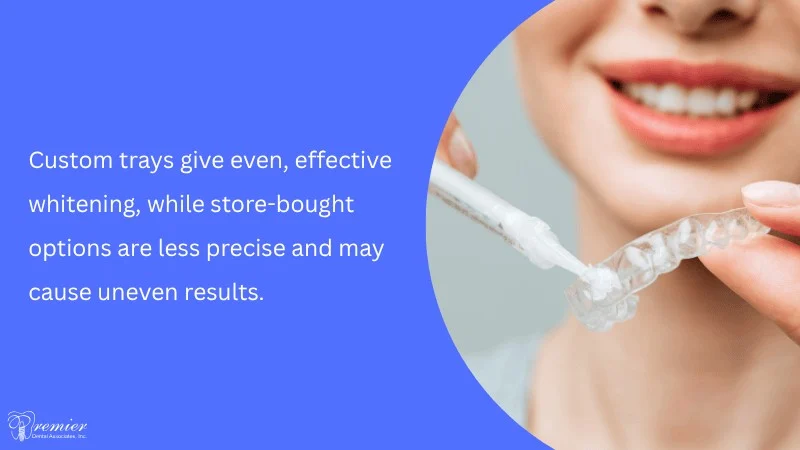
The way whitening gel reaches your teeth makes a huge difference in results. Custom-fitted trays keep the gel in direct contact with your tooth enamel and prevent it from leaking onto your gums.
Professional custom trays fit snugly around each tooth. This ensures even coverage and consistent whitening across your entire smile. The tight fit also keeps saliva from diluting the whitening gel.
Store-bought whitening strips cover only the front visible teeth and may not reach the edges or back teeth. Generic trays that come with at-home kits often slip around or leave gaps where the gel doesn’t touch your teeth.
Professional treatments are performed in a controlled, customized way that protects your gums while maximizing contact time.
Store-bought products rely on you to apply them correctly, which can lead to uneven results or gum irritation if the gel spreads beyond your teeth.
Get a brighter smile fast. Schedule professional teeth whitening in Lyndhurst, Ohio, today.
Effectiveness and Whitening Results: What Can You Expect?
The type of stains on your teeth and the whitening method you choose will determine how much brighter your smile becomes.
Professional treatments deliver faster, more dramatic results while store-bought options work more slowly on lighter surface stains.



Surface Stains Versus Deep Discoloration
Extrinsic stains sit on the outer layer of your teeth and come from coffee, tea, red wine, and tobacco.
Both professional and store-bought whitening methods can remove these surface stains, but professional treatments work much faster.
Intrinsic stains live deep inside your tooth enamel. These develop from aging, certain medications like tetracycline, or tooth trauma.
Store-bought whitening kits contain only 3-10% peroxide, which can’t reach intrinsic discoloration effectively.
Professional treatments use up to 35% peroxide concentration. This stronger formula penetrates deeper into your enamel to target intrinsic stains that over-the-counter products miss entirely.
If you have mild surface stains, a store-bought whitening kit might brighten your smile a shade or two. Deep discoloration requires the stronger bleaching agents only dentists can provide.
Uneven Whitening and Coverage Challenges
Store-bought whitening strips often don’t fit your teeth perfectly. They can slip around in your mouth, leaving some areas whiter than others. The one-size-fits-all approach means gaps between your teeth might not get properly covered.
Professional treatments use custom whitening trays made from molds of your actual teeth. These trays fit snugly against every surface, ensuring the whitening gel reaches all areas evenly.
Professional take-home kits also include custom trays with stronger gel than you’d find in stores. Your dentist monitors your whitening regimen to prevent irritation and ensure consistent results across all visible teeth.
In-office treatments allow dentists to carefully apply whitening agents to each tooth. They protect your gums and adjust the application to achieve uniform color across your entire smile.
Longevity and Maintenance of Whitening Results
Professional whitening results typically last 6 months to 2 years with proper care. The stronger bleaching agents create deeper, longer-lasting changes to your tooth color.
Take-home whitening kits from the drugstore usually fade within 1-3 months. Their lower peroxide content creates more superficial changes that wear away faster.
To maintain your whitening results, you need to:
- Brush and floss daily to prevent new stains
- Limit staining beverages like coffee and red wine
- Avoid tobacco products completely
- Schedule regular dental cleanings
Your dentist may recommend occasional touch-up treatments to keep your teeth bright. These maintenance sessions take less time than your initial whitening and help you maintain your results for years.
Safety, Sensitivity, and Suitability for Your Smile
Both professional and store-bought whitening products use peroxide-based bleaching agents, but the level of supervision and customization affects how safe they are for your teeth and gums.
Professional treatments minimize risks through tailored approaches, while over-the-counter products follow a one-size-fits-all method that can lead to discomfort or complications.
Managing Tooth Sensitivity and Gum Irritation
Tooth sensitivity is the most common side effect of whitening treatments. You might feel sharp pain when eating cold or hot foods during and after whitening.
Professional whitening offers better sensitivity management because dentists can adjust peroxide concentration levels based on your needs.
They can also provide desensitizing agents to use before, during, or after treatment. These products contain ingredients like potassium nitrate that block pain signals from your tooth nerves.
Store-bought kits often cause more discomfort because they can’t be customized. The trays may not fit properly, allowing gel to leak onto your gums and cause gum irritation or inflammation.
If you experience sensitivity with any whitening product, try these approaches:
- Use the product less frequently or for shorter sessions
- Switch to a lower concentration formula
- Apply desensitizing toothpaste for two weeks before whitening
- Take breaks between treatments to let your teeth recover
Dental Restorations: Crowns, Veneers, and Bonding
Whitening products only work on natural tooth enamel. They won’t change the color of dental restorations like crowns, veneers, or bonding.
This creates a problem if you have visible restorations on your front teeth. When you whiten your natural teeth, the restorations will stay their original color. You’ll end up with mismatched teeth that look uneven.
A dentist can help you plan around this issue. They might suggest whitening your natural teeth first, then replacing old restorations to match your new shade.
Or they might recommend skipping whitening altogether if you have multiple visible restorations.
Store-bought kits don’t account for dental work. You could spend money on whitening only to discover your front tooth crown now looks yellow compared to your whitened natural teeth.
Who Should Avoid Whitening Treatments?
Some people should avoid whitening products entirely or wait until their dental health improves. Pregnant and breastfeeding women should skip whitening since research on safety during pregnancy is limited.
Children under 16 shouldn’t use whitening products because their tooth pulp is still developing. The whitening gel could irritate the pulp or cause long-term sensitivity.
You should also avoid whitening if you have:
- Gum inflammation or active gum disease
- Cavities or exposed tooth roots
- Extremely sensitive teeth
- Worn enamel or thin tooth structure
- Allergies to peroxide or whitening ingredients
People with these conditions need dental treatment before they can safely whiten their teeth. A dentist will evaluate your oral health and tell you whether whitening is suitable for your situation.
Professional Whitening: In-Office and Dentist-Guided Options
Professional teeth whitening uses higher concentrations of bleaching agents than store products, with in-office treatments reaching up to 40% hydrogen peroxide while take-home kits from dentists contain 10% to 38% carbamide peroxide.
In-Office Whitening Procedures
Your dentist applies a high-concentration whitening gel directly to your teeth during these appointments. The process takes 60 to 90 minutes and often includes multiple 15 to 30-minute applications.
Before treatment starts, your dentist uses a rubber dam or barrier to protect your gums from the strong bleaching agent. This protection is necessary because the concentrated peroxide can burn soft tissue if it makes contact.
Some in-office whitening procedures combine the gel with LED, UV, or halogen lights to speed up results. Your dentist may also polish your teeth with pumice to remove plaque before applying the whitening agent.
You’ll typically see results immediately, though your teeth may appear slightly darker after a few days as they rehydrate. The treatment costs between $800 and $1,000 per session.
Professional Take-Home Kits
Your dentist creates custom-fitted trays from impressions of your teeth for at-home use. These trays fit your mouth precisely, which helps the whitening gel reach all tooth surfaces evenly.
You’ll fill the trays with a carbamide peroxide gel and wear them for 2 to 10 hours daily. Treatment usually lasts up to 28 days depending on your starting shade and desired results.
Custom trays cost $300 to $600 and can be reused for years. You just need to order more gel from your dentist for touch-ups. The custom fit prevents gel from slipping onto your gums, which reduces sensitivity compared to drugstore trays.
Want safe and long lasting whitening. Book your expert consultation in Lyndhurst, Ohio now.
Customization and Dental Supervision
Your dentist examines your teeth before recommending any whitening treatment. This checkup identifies cavities, gum disease, or other issues that need fixing first.
Professional whitening won’t work on:
- Porcelain crowns or veneers
- Bonded tooth areas
- Teeth with tetracycline staining
- Areas with excessive fluoride exposure
Your dentist discusses realistic expectations based on your tooth color and type of staining. They also ensure the whitening agent won’t harm dental restorations you already have.
Surface stains from coffee, wine, and tobacco respond best to professional whitening, while internal discoloration may need different treatments.
Store-Bought Whitening Kits: Options, Pros, and Cons
Store-bought whitening products come in many forms, from strips and gels to trays and toothpastes. Each type works differently and offers varying levels of whitening power at different price points.
Over-the-Counter Whitening Strips and Gels
Whitening strips are thin, flexible pieces of plastic coated with a peroxide-based gel. You apply them directly to your teeth for 30 minutes to an hour each day. Most strip kits last for two weeks and can lighten your teeth by a few shades.
Store-bought whitening kits can help with mild surface staining but often struggle with deeper discoloration. The whitening gel typically contains lower concentrations of bleaching agents compared to professional options.
This means you’ll need more time to see results.
Pros of OTC whitening strips:
- Easy to use at home
- Cost between $20 to $60
- Available at most drugstores
- No dentist appointment needed
Cons:
- Generic fit may not cover all teeth evenly
- Can slip during use
- May cause temporary tooth sensitivity
- Less effective on stubborn stains
Tray-Based and LED Whitening Systems
At-home whitening kits with trays include a whitening gel and plastic trays that fit over your teeth. Some systems also come with LED lights that claim to speed up the whitening process.
You fill the trays with gel and wear them for 30 minutes to several hours.
The main issue with store-bought tray systems is the one-size-fits-all approach. Store-bought kits are one-size-fits-all solutions that may not fit your mouth perfectly. This can lead to uneven whitening or gel leaking onto your gums.
These kits usually cost between $50 to $150. They contain stronger bleaching agents than strips but still less than professional options. The LED lights add to the cost but scientific evidence supporting their effectiveness remains limited.
Whitening Toothpaste and Other At-Home Products
Whitening toothpaste works differently than other OTC whitening products. Instead of bleaching your teeth, it uses mild abrasives and chemical agents to remove surface stains.
You won’t see dramatic color changes, but these products can help maintain whiteness after other treatments.
Most whitening toothpastes cost $5 to $15 per tube. You use them just like regular toothpaste, making them the easiest whitening option. They work best for coffee, tea, or wine stains that sit on the tooth surface.
Other at-home products include whitening rinses and pens. Rinses contain small amounts of hydrogen peroxide and work like mouthwash.
Pens let you paint whitening gel directly onto your teeth for touch-ups. Both options provide minimal whitening compared to strips or trays.
Cost, Convenience, and Making the Right Choice
Professional teeth whitening typically costs between $300 and $1,000 per session, while store-bought whitening kits range from $5 to $100.
Your budget matters, but so does how quickly you want results and how much effort you’re willing to put into your whitening regimen.

Upfront Cost and Long-Term Value
In-office treatments range from $300-$1,000 per session, which feels like a big investment upfront. However, professional teeth whitening delivers faster results that last longer.
Store-bought whitening kits cost much less initially. You can find options between $5 and $100 at your local pharmacy. But these products often require weeks of daily use to see mild changes.
The real question is value over time. Professional treatments give you noticeable results in one visit that can last up to three years with proper care.
Store-bought options might need frequent repurchasing to maintain any whitening effect. Store-bought whitening kits can help with mild surface staining but often fall short for older or stubborn discoloration.
Lifestyle Considerations and Treatment Goals
Your daily schedule plays a big role in choosing between teeth whitening options. Professional whitening takes one or two office visits. You’re done in about an hour.
Store-bought kits require commitment. You’ll need to apply strips or trays for 30 minutes to an hour daily, sometimes for several weeks. If you forget days or skip applications, your results suffer.
Think about your whitening goals too. Do you want a dramatically whiter smile for an upcoming wedding or event? Professional whitening administered by a dentist is the superior choice for fast, noticeable changes.
Are you just trying to brighten your smile a shade or two? Store-bought products might work fine for minor improvements.
Your teeth’s condition matters as well. Deep stains from years of coffee or smoking respond better to the stronger whitening agents dentists use.
Frequently Asked Questions
Professional whitening uses stronger bleaching agents and custom application methods, while store-bought products contain lower concentrations of whitening ingredients.
Results from dentist-supervised treatments typically last one to three years with proper care.
What’s the main difference between dentist whitening and over-the-counter whitening products?
The biggest difference comes down to the strength of the whitening agent used. Dentists can use hydrogen peroxide or carbamide peroxide at much higher concentrations than what you’ll find in store-bought kits.
Professional whitening uses higher-strength whitening agents applied in a controlled, customized way. Store-bought kits typically contain 3-10% hydrogen peroxide, while dentist treatments can use up to 35-40% concentration.
Another key difference is customization. Dentists create custom trays that fit your teeth perfectly, ensuring even coverage. Store-bought strips and trays aren’t customized, so the gel may not contact all areas of your teeth evenly.
How long do results from professional teeth whitening usually last?
Professional whitening results typically last between one and three years. The exact duration depends on your habits and how well you maintain your teeth.
If you drink coffee, tea, or red wine regularly, your results may fade faster. Smoking can also cause your teeth to yellow more quickly after treatment.
You can extend your results by avoiding staining foods and beverages, brushing twice daily, and using touch-up treatments as recommended by your dentist. Some people do quick touch-ups every six months to maintain their bright smile.
Are at-home whitening kits actually effective for noticeable stains?
At-home kits can work for mild surface staining, but they often struggle with deeper discoloration. Store-bought whitening kits can help with mild surface staining but often fall short for older or stubborn discoloration.
If you have stains from coffee or tea that built up over several months, over-the-counter strips might give you decent results. These products can lighten your teeth by a few shades over two to four weeks.
However, if you’re dealing with age-related yellowing or deep stains from medications, you’ll likely need professional treatment.
The lower concentration of bleaching agents in store-bought kits just isn’t strong enough to penetrate deeply stained teeth.
How much does a dentist-provided take-home whitening tray kit typically cost?
Dentist-provided take-home kits usually cost between $200 and $500. This includes custom-fitted trays made specifically for your teeth and professional-grade whitening gel.
The price varies based on your location and the specific dentist you visit. Some practices charge more if they include multiple syringes of whitening gel or offer follow-up appointments.
While this costs more than store-bought kits that range from $20 to $100, you’re getting custom trays and stronger whitening gel. These professional take-home kits often deliver better and longer-lasting results than drugstore options.
Does dental insurance ever cover teeth whitening, and when might it help with the cost?
Most dental insurance plans don’t cover teeth whitening because insurers consider it a cosmetic procedure. You’ll typically need to pay out of pocket for whitening treatments.
Some exceptions exist for specific medical situations. If tooth discoloration resulted from certain medications or trauma, your insurance might help cover the cost.
A few dental discount plans or supplemental insurance policies include reduced rates for whitening services. Check with your insurance provider to see if they offer any coverage or discounts.
Some dentists also offer payment plans or financing options to make professional whitening more affordable.
Which is better for results and sensitivity: laser whitening or custom whitening trays?
Both methods can deliver excellent whitening results, but they work differently and affect sensitivity in distinct ways. Laser whitening gives you immediate results in one office visit, while custom trays require consistent use over one to two weeks at home.
Laser whitening can cause more immediate sensitivity because it uses very high concentrations of bleaching agent activated by light or heat. You might experience sharp sensitivity for 24 to 48 hours after treatment.
Custom trays tend to cause less intense sensitivity since you control the application and can take breaks if needed.
The whitening gel has a lower concentration than in-office treatments, so it works more gradually on your teeth. Many people find trays easier to tolerate if they already have sensitive teeth or gums.