Jaw pain and nighttime teeth grinding are problems that many people deal with, but they’re not always the same thing.
TMJ disorder affects the jaw joint and surrounding muscles, while teeth grinding (bruxism) is the act of clenching or grinding your teeth, often during sleep.
Understanding the key differences between these conditions helps you get the right treatment and find relief faster.
You might have one condition, both conditions, or one that causes the other. Sometimes teeth grinding can lead to TMJ disorder over time, which makes figuring out what’s happening more confusing.
The symptoms can overlap, but there are clear signs that point to each problem.
This guide will help you spot the differences between TMJ disorder and teeth grinding. You’ll learn what symptoms to look for, how these conditions connect, and what treatment options work best for each one.
Key Takeaways
- TMJ disorder involves jaw joint problems while teeth grinding is the act of clenching or grinding teeth
- The two conditions can exist separately or together, and grinding can sometimes cause TMJ disorder
- Getting the right diagnosis is important because treatment approaches differ for each condition
Get expert TMJ vs bruxism diagnosis in Lyndhurst, Ohio today
Table of Content
- Understanding TMJ Disorder and Teeth Grinding
- Key Differences Between TMJ Disorder and Teeth Grinding
- Recognizing Symptoms: TMJ Disorder vs. Bruxism
- How Are TMJ Disorder and Teeth Grinding Connected?
- Diagnosing TMJ Disorder and Bruxism
- Treatment and Prevention for TMJ Disorder and Teeth Grinding
- Frequently Asked Questions
Understanding TMJ Disorder and Teeth Grinding
The temporomandibular joint connects your jaw to your skull, and problems with this joint or teeth grinding can cause similar symptoms. These conditions affect millions of people but work differently in your body.
What Is the Temporomandibular Joint?
Your temporomandibular joint sits on both sides of your face, right where your jawbone meets your skull. You can feel these joints if you place your fingers just below and in front of your ears while opening and closing your mouth.
These joints work together every time you chew, talk, or yawn. Each joint has a small disc inside that acts like a cushion between the bones. This disc helps your jaw move smoothly up and down and side to side.
Your TMJ is one of the most complex joints in your body. It can rotate and slide at the same time, which lets you make different jaw movements. The muscles around these joints also play a big role in how your jaw works.
What Is TMJ Disorder (TMD)?
TMJ disorder happens when your jaw joint and the muscles that control jaw movement stop working properly. You might hear it called TMD or temporomandibular joint disorder.
This condition can cause pain in your jaw joint and the muscles around it. Your jaw might click, pop, or even get stuck when you try to open or close your mouth. Some people find it hard to chew or feel like their jaw is tired.
TMD affects 20-30% of adults, and women are 50% more likely to develop it than men. The pain can spread to your face, neck, and shoulders. You might also get headaches or notice your ears feel full or ring.
What Is Bruxism (Teeth Grinding)?
Bruxism means you grind your teeth or clench your jaw, often without knowing it. This can happen while you sleep or during the day when you feel stressed or focused on something.
Sleep bruxism affects about 8-16% of adults. Many people don’t realize they grind their teeth until someone tells them or their dentist spots wear on their teeth. The grinding forces can be up to six times stronger than normal chewing.
Awake bruxism usually involves more clenching than grinding. You might notice you clench your jaw when you concentrate or feel anxious. Both types can damage your teeth and cause jaw soreness over time.
Visit Premier Dental Associates in Lyndhurst, Ohio for jaw pain relief
Key Differences Between TMJ Disorder and Teeth Grinding
TMJ disorder and bruxism involve different problems with your jaw, though they often overlap. TMJ disorder affects the joint itself and the muscles around it, while bruxism is the action of grinding or clenching your teeth.
How TMJ Disorder and Bruxism Affect the Jaw and Teeth
TMJ disorder causes problems in your temporomandibular joint, which connects your jaw to your skull. When you have TMJ disorder, you might hear clicking or popping sounds when you open your mouth.
The joint can become stiff, making it hard to open your mouth wide.
Your jaw might lock in place or shift to one side when you try to eat or talk. TMJ disorders can cause significant pain that spreads to your face, neck, and shoulders.
Bruxism affects your teeth directly through grinding and clenching. You might grind your teeth during sleep without knowing it. This constant grinding wears down your tooth enamel over time.
Your teeth can become flat, chipped, or loose from the pressure. Bruxism also strains your jaw muscles, causing soreness and tension headaches when you wake up.
Distinct Causes of TMJ Disorder vs. Bruxism
The causes of TMJ disorder include joint injuries, arthritis, and structural problems with your jaw. You might develop TMJ disorder if you have malocclusion, which means your teeth don’t fit together correctly. Poor bite alignment puts extra stress on your joint.
TMJ disorder can also start from cartilage damage or disc displacement in the joint. Sometimes the cause isn’t clear, making diagnosis harder.
Bruxism has different triggers than TMJ disorder. Stress and anxiety are the main reasons you might grind your teeth at night. Your sleep patterns and certain medications can also cause grinding.
Drinking alcohol or caffeine before bed increases your risk. Some people develop bruxism because of sleep disorders like sleep apnea.
Unique Risks and Complications
TMJ disorder can lead to chronic jaw pain that doesn’t go away without treatment. The joint damage might get worse over time, causing arthritis. You could develop ongoing muscle tension in your face and neck.
In severe cases, your jaw movement becomes limited, affecting your ability to eat comfortably. The constant pain can also impact your sleep quality and daily activities.
Bruxism creates its own set of problems for your jaw health. The grinding wears away your tooth enamel, leading to cavities and tooth sensitivity. You might need crowns, fillings, or other dental work to fix damaged teeth.
Teeth grinding can lead to TMJ disorder if left untreated, creating a cycle of problems. The constant pressure can crack or fracture your teeth, requiring expensive repairs.
Book an appointment to discover the right treatment for TMJ or bruxism now



Recognizing Symptoms: TMJ Disorder vs. Bruxism
Both conditions affect your jaw and can cause significant discomfort, but they show up differently in your body. TMJ disorder involves problems with your jaw joint itself, while bruxism centers on the grinding and clenching of your teeth.
Common Symptoms of TMJ Disorder

TMJ disorder symptoms focus on the joint that connects your jaw to your skull. You might notice jaw pain when you open your mouth wide or chew your food. Many people hear clicking or popping sounds when they move their jaw.
The pain doesn’t stay in one place. You may experience facial pain that spreads across your cheeks or near your ears. Headaches are common, especially around your temples.
Limited jaw movement makes everyday tasks harder. You might struggle to open your mouth fully or feel like your jaw gets stuck. Some people develop jaw lock, where the jaw temporarily freezes in one position.
Other signs include neck and shoulder pain that radiates from your jaw area. You could also experience tinnitus, which is ringing in your ears. Difficulty chewing or biting down properly is another red flag.
Typical Signs of Teeth Grinding
Bruxism symptoms revolve around the actual grinding and clenching of your teeth. You might wake up with a sore jaw or tight jaw muscles. Many people don’t realize they grind their teeth during sleep until someone tells them about the sound.
Your teeth will show signs of wear. They may look flattened, chipped, or fractured. Tooth sensitivity increases because the protective enamel wears down from constant grinding.
You’ll likely notice headaches, particularly in the morning when you first wake up. Your jaw muscles feel tired or tight, even though you haven’t been chewing anything. Jaw clenching can happen during the day too, especially when you’re stressed or concentrating hard.
Sleep disturbances affect many people with bruxism. The grinding motion can disrupt your rest or bother your sleep partner. You might also develop a dull toothache without any obvious cavity or dental problem.
Overlapping Symptoms to Watch For
Both conditions share several symptoms that make diagnosis tricky. Jaw pain appears in TMJ disorder and bruxism, though the cause differs. Headaches trouble people with either condition.
Symptoms that appear in both:
- Jaw pain and soreness
- Headaches (especially morning headaches)
- Facial pain
- Neck and shoulder pain
- Difficulty chewing
The key difference lies in the source. Bruxism symptoms come from repetitive grinding, while TMJ pain stems from joint dysfunction.
Your dentist can examine your teeth for wear patterns and check how your jaw joint moves to determine which condition you have.
How Are TMJ Disorder and Teeth Grinding Connected?
These two conditions create a cycle where each one can trigger or worsen the other. Grinding your teeth puts stress on your jaw joints, while TMJ problems can cause your muscles to clench and grind.
Can Teeth Grinding Cause TMJ Disorder?
Yes, chronic teeth grinding can lead to TMJ disorder over time. When you grind or clench your teeth, you put intense pressure on your temporomandibular joints. This repeated stress can damage the joints and surrounding muscles.
The force from clenching and grinding can be several times stronger than normal chewing. Your jaw wasn’t designed to handle this much pressure for extended periods. Night after night of grinding wears down the protective cartilage in your TMJ.
Jaw clenching also keeps your muscles tense for hours. This constant tension can cause inflammation in the joint area. The muscles that control jaw movement become overworked and strained.
Your oral health suffers too. Bruxism wears down tooth enamel and can chip or crack teeth. As your bite changes from this wear, it puts even more stress on your jaw joints. This creates a harmful cycle that damages both your teeth and TMJ.
How TMJ Problems Lead to Bruxism
TMJ disorder can trigger teeth grinding as your body tries to find a comfortable jaw position. When your temporomandibular joints don’t work properly, your jaw muscles work harder to compensate. This extra effort often shows up as grinding or clenching.
Your body may grind your teeth unconsciously to try to adjust your bite. If your jaw joints are misaligned, your muscles keep searching for a position that feels right. This searching motion becomes bruxism.
TMJ vs bruxism isn’t always an either-or situation. Many people have both conditions at the same time. The jaw pain and discomfort from TMJ disorder can also increase your stress levels. Higher stress makes you more likely to clench your jaw during the day or grind at night.
Muscle tension from TMJ problems doesn’t go away when you sleep. Your tight jaw muscles stay active and may cause grinding throughout the night. This means your jaw never gets the rest it needs to heal.
Diagnosing TMJ Disorder and Bruxism
Getting the right diagnosis requires a thorough examination by a dental professional who can identify specific signs of each condition.
Your dentist will look for tooth wear patterns, joint problems, and muscle tenderness to determine whether you have TMJ disorder, bruxism, or both conditions together.
When to See a Dentist or Specialist
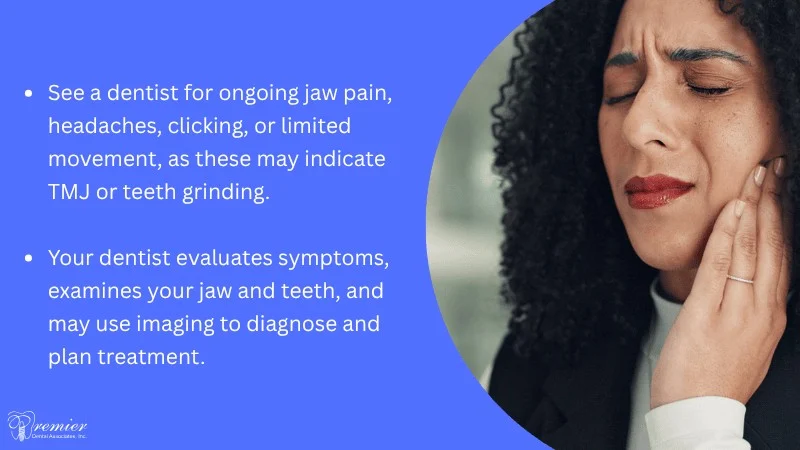
You should schedule an appointment if you notice persistent jaw pain, headaches, or clicking sounds when you open your mouth. Morning headaches that feel like migraines can signal nighttime teeth grinding.
Look for physical signs like chipped teeth, unusual tooth sensitivity, or visible wear on your tooth surfaces. These symptoms often indicate bruxism that needs treatment.
If you experience difficulty opening your mouth fully or your jaw deviates to one side, these are signs of TMJ dysfunction that require professional evaluation.
Your regular dental check-ups play an important role in early detection. Dentists can spot problems before you even notice symptoms. If your dentist identifies concerns beyond their expertise, they may refer you to a TMJ specialist or oral surgeon for advanced care.
Diagnostic Tools and Evaluations
Your examination starts with a detailed health history and discussion of your symptoms. The dentist will ask about stress levels, sleep quality, and when your pain occurs.
During the physical exam, your dentist will palpate your jaw muscles and check for tenderness or enlargement. They’ll listen and feel for clicking or popping sounds as you open and close your mouth.
A thorough dental examination includes checking for wear facets on your teeth that match between upper and lower arches.
Imaging may be necessary for complex cases. X-rays can reveal bone changes or problems with your bite alignment. For suspected joint inflammation or damage, your dentist might order an MRI.
If you have misaligned teeth contributing to your condition, your dentist may discuss orthodontic treatment options like braces. They’ll also check for related issues such as gum disease that could complicate treatment.
Treatment and Prevention for TMJ Disorder and Teeth Grinding
Managing TMJ disorder and bruxism requires a combination of professional treatments, protective devices like mouthguards, and daily habits that reduce jaw strain and stress.
Your treatment plan should address both immediate symptoms and long-term prevention strategies.
Treatment Options for TMJ Disorder
Your doctor may recommend several treatment options for TMJ dysfunction depending on your symptoms. Physical therapy exercises can help strengthen your jaw muscles and improve movement.
Your dentist might suggest a custom mouthguard to prevent teeth grinding at night and reduce pressure on your jaw joint.
Over-the-counter pain relievers can help manage discomfort. Some people benefit from muscle relaxants prescribed by their doctor. In more severe cases, Botox injections may be used to relax tight jaw muscles.
Your healthcare provider might recommend warm compresses applied to your jaw area. Gentle jaw stretches can also provide relief. Most people find improvement with conservative treatments before considering more invasive options.
Bruxism Treatment and Prevention
A custom night guard is one of the most effective bruxism treatments available. These devices protect your teeth from grinding damage while you sleep.
A custom-fitted mouthguard from your dentist works better than over-the-counter options because it fits your teeth precisely.
Your dentist will check for bite problems that might contribute to grinding. Sometimes fixing misaligned teeth or adjusting dental work can reduce symptoms. You should avoid chewing gum and hard foods that strain your jaw muscles.
Regular dental checkups help catch grinding damage early. Your dentist can monitor tooth wear and adjust your treatment as needed.
Lifestyle Changes and Home Remedies

Simple daily changes can significantly reduce your symptoms. Avoid hard or chewy foods like tough meat, bagels, and candy. Cut food into smaller pieces to reduce chewing strain.
Apply ice packs or warm compresses to sore jaw muscles for 10-15 minutes. Practice gentle jaw exercises recommended by your physical therapist. Keep your tongue between your teeth during the day to prevent clenching.
You should also:
- Avoid excessive yawning or wide jaw movements
- Use proper posture when sitting and working
- Take breaks from activities that require repetitive jaw movements
- Stay hydrated throughout the day
Stress Management and Sleep Hygiene
Stress and anxiety are major triggers for both TMJ disorder and teeth grinding. Practice relaxation techniques like deep breathing exercises, meditation, or yoga. These methods help reduce muscle tension throughout your body, including your jaw.
Establish a consistent sleep routine by going to bed at the same time each night. Create a calm bedroom environment that promotes restful sleep.
You should limit caffeine and alcohol, especially in the evening, since both can worsen grinding and interfere with sleep quality.
If you have sleep disorders like sleep apnea, treatment can improve your bruxism symptoms. Talk to your doctor about a sleep study if you snore loudly or wake up tired.
Good sleep hygiene includes avoiding screens before bed and keeping your bedroom cool and dark.
Frequently Asked Questions
TMJ disorders and teeth grinding share some symptoms but have different root causes, diagnostic methods, and treatment approaches. Understanding these differences helps you get the right care for your specific condition.
What are the distinguishing symptoms between TMJ disorders and teeth grinding?
Teeth grinding, or bruxism, mainly involves involuntary clenching or grinding of your teeth. This usually happens during sleep and can cause worn tooth enamel, jaw soreness when you wake up, and dull headaches.
TMJ disorders affect your jaw joint itself. Your pain changes with jaw movement beyond just chewing, like when you yawn, talk for extended periods, sing, or laugh hard.
You might hear clicking or popping sounds in your jaw with TMJ disorders. Your jaw may feel stiff or even lock in certain positions. TMJ can also cause ear pain and facial discomfort that spreads beyond just your jaw muscles.
How can a dentist differentiate between bruxism and TMJ during an examination?
Your dentist will start with a detailed history of your symptoms. They’ll ask about when your pain occurs, what makes it worse, and if you notice grinding sounds during sleep.
During the physical exam, your dentist checks for restrictions in jaw movement and tenderness in the surrounding muscles. They’ll also look for signs of tooth wear that indicate grinding.
Imaging tests like X-rays provide a clear view of your joint structure. MRI scans can show the health of soft tissues around the jaw joint. Your dentist may also use standardized questionnaires to measure the intensity of your pain and discomfort.
What treatments are available specifically for TMJ that differ from those for bruxism?
TMJ treatment often focuses on the jaw joint itself rather than just protecting your teeth. Physical therapy exercises can help improve jaw movement and reduce muscle tension around the joint.
Some patients benefit from medications that reduce inflammation in the joint. Your dentist might recommend different types of oral appliances designed to reposition your jaw rather than just prevent grinding.
In more severe cases, joint injections or surgical interventions may be necessary for TMJ disorders. These treatments target structural problems in the joint that don’t typically apply to bruxism alone.
Can continuous teeth grinding lead to the development of TMJ issues?
Yes, teeth grinding can lead to TMJ disorder over time. The excessive force from grinding places significant strain on your jaw joint.
This constant pressure can damage the joint structure and surrounding tissues. The muscles that control jaw movement become overworked and tense from repeated clenching.
Many people develop both conditions together because bruxism aggravates existing TMJ problems. Addressing teeth grinding early can help prevent TMJ dysfunction from developing or worsening.
Is it possible to completely cure bruxism, and will this also improve TMJ symptoms?
Complete cure of bruxism varies by person and depends on the underlying causes. If stress or anxiety triggers your grinding, managing these factors through relaxation techniques can significantly reduce or eliminate the habit.
Treating bruxism often improves TMJ symptoms because it reduces strain on your jaw joint. However, if your TMJ disorder has already caused structural damage, you may still need additional treatment even after stopping the grinding.
Some people successfully stop grinding with dental appliances and lifestyle changes. Others may need ongoing management to control the behavior and protect their jaw health.
What role does Botox play in the treatment of bruxism, and is it effective for TMJ patients?
Botox injections work by relaxing the jaw muscles that cause grinding and clenching. The treatment temporarily weakens these muscles, reducing the force they can generate during grinding episodes.
For bruxism patients, Botox can provide significant relief from jaw muscle pain and reduce tooth wear. The effects typically last three to six months before you need another treatment.
Botox can be an effective treatment option for TMJ patients as well, especially when muscle tension contributes to joint pain. The injections help decrease muscle activity around the jaw joint, which can relieve pressure and discomfort.
However, Botox works best as part of a comprehensive treatment plan that addresses other factors contributing to your condition.