You expect your dental crown to stay in place. When it keeps falling off, you feel frustrated and worried about what it means for your tooth.
Your dental crown keeps falling off because of weak cement, tooth decay under the crown, damage to the crown, or pressure from grinding and chewing hard foods.
If you ignore the problem, you risk more damage and more trips to the dentist.
You can stop the cycle. When you understand what causes a loose crown and how to protect it, you lower the chance that it will come off again.
Key Takeaways
- Crowns fall off due to decay, damage, poor fit, or heavy pressure.
- Quick action protects your tooth and lowers the risk of pain or infection.
- Good daily care and regular dental visits help keep your crown secure.
Table of Content
- Why Your Dental Crown Keeps Falling Off
- Common Triggers That Cause Crowns to Become Loose
- Immediate Steps to Take When Your Crown Falls Off
- How to Prevent Your Dental Crown from Falling Off Again
- When to Replace or Repair Your Dental Crown
- Frequently Asked Questions
Why Your Dental Crown Keeps Falling Off
When a dental crown keeps coming loose, the problem usually starts with fit, tooth support, bonding strength, or bite pressure. Each of these issues affects how well your crown stays attached during daily chewing and speaking.

Poorly Fitted Dental Crown
A poorly fitted crown is one of the most common reasons dental crowns fall off. Your crown must match the exact shape and size of your prepared tooth. Even a small gap can cause problems.
If the crown does not sit snugly against your tooth, saliva and bacteria can seep underneath. This weakens the seal and can lead to decay. Over time, the crown loses support and becomes a loose crown.
You might notice:
- Food getting stuck around the crown
- A slight rocking feeling when you chew
- Sensitivity along the gumline
A crown that feels high or uneven can also shift during biting. When the fit is off, the dental cement cannot hold it securely. A precise fit is not optional. It is essential for long-term stability.
Insufficient Tooth Structure or Damage
Your dental crown needs a strong base. If you have insufficient tooth structure, the crown may not have enough surface area to grip.
This often happens when:
- A large cavity removes too much of the natural tooth
- A fracture weakens the remaining tooth
- An old filling breaks down under the crown
If the tooth underneath shrinks due to decay, the crown no longer fits the same way. Even a well-made crown can loosen if the foundation changes.
Dentists rely on healthy enamel and dentin to anchor the crown. When too much natural tooth is missing, the bonding material cannot create a strong hold. In some cases, you may need a buildup or post to rebuild support before placing a new crown.
Without enough structure, repeated re-cementing will not solve the problem.
Dental Cement or Bonding Material Failure
Dental cement plays a critical role in keeping your crown secure. It fills small gaps and locks the crown in place.
Over time, cement can wear down. Chewing, temperature changes, and daily pressure slowly weaken the bonding material. If the cement breaks down, your crown may start to feel loose.
Certain habits speed up this process:
- Chewing ice
- Eating sticky candy
- Grinding your teeth
- Using your teeth to open packages
If moisture contaminates the area during placement, the cement may never bond properly. A crown placed without a clean, dry surface may fail earlier than expected.
When cement fails, your dentist may re-cement the crown if the tooth underneath is still healthy. If decay is present, additional treatment comes first.
Bite Issues and Pressure
Your bite plays a bigger role than you might think. If your crown hits harder than your other teeth, it absorbs extra force every time you chew.
This repeated stress can break down the bonding material and shift the crown. You may notice soreness in the jaw or tenderness around the crowned tooth.
Teeth grinding, also called bruxism, creates even more pressure. Night grinding can loosen dental crowns faster than normal chewing. A bite that is even slightly misaligned increases the risk.
Signs your bite may be causing problems include:
- The crown feels taller than the nearby teeth
- Pain when biting down
- A clicking jaw
Your dentist can adjust the crown’s shape to balance your bite. In some cases, a night guard protects your crown from grinding damage.
Common Triggers That Cause Crowns to Become Loose
Several daily habits and hidden dental problems can weaken the bond between your crown and tooth.
Pressure, sticky foods, and decay under the crown often play a direct role when your crown falls out. Your dental health and diet play a major role in keeping your crown secure.
Teeth Grinding and Bruxism
If you grind your teeth at night, you put steady force on your crown. This habit, called bruxism, creates more pressure than normal chewing.
Over time, that pressure can loosen the cement that holds the crown in place. In some cases, it can even crack the crown itself. Back teeth face the most stress because they handle most of your bite force.
You may not know you grind your teeth. Signs include:
- Jaw soreness in the morning
- Headaches near your temples
- Worn or flattened teeth
If you have bruxism, your dentist may suggest a night guard. This custom device spreads out pressure and protects both your natural teeth and your crown.
Without treatment, repeated teeth grinding can shorten the life of your dental work.
Chewing Sticky or Hard Foods
What you eat affects how well your crown stays in place. Sticky foods can grab onto a crown and slowly pull it upward.
Common problem foods include:
- Caramel
- Taffy
- Chewing gum
Hard foods can also cause trouble. Ice, hard candy, and unpopped popcorn kernels place sharp force on the crown.
If the cement seal is already weak, one strong bite can cause the crown fell out. Dentists often warn patients about these risks because sticky food may pull out the crown.
You do not need to avoid chewing most foods. But you should avoid chewing hard objects and limit sticky snacks, especially if your crown already feels loose.
Decay Under the Crown
A crown covers your tooth, but it does not make it immune to cavities. Bacteria can slip under the edges if plaque builds up near the gumline.
When decay forms under the crown, it weakens the tooth structure. The crown no longer fits tightly, and small gaps may develop. According to experts, recurring tooth decay under a crown can change the shape of the tooth and cause the crown to loosen.
You may notice:
- Sensitivity to cold
- A bad taste in your mouth
- Swelling near the crown
Brushing twice a day and flossing along the gumline protect the edges of the crown. Clean margins help keep bacteria out and support a secure fit.
Immediate Steps to Take When Your Crown Falls Off
When your crown fell out, quick action protects your tooth and improves the chance your dentist can reattach it. Focus on saving the crown, shielding the exposed tooth, and avoiding pressure on that area until your dental visit.
Safely Storing the Crown
First, find the crown and pick it up carefully. Hold it by the chewing surface, not the inside, to keep it clean.
Rinse it gently with lukewarm water. Do not scrub it or use soap, toothpaste, or chemicals. Scrubbing can damage the fit.
After rinsing, let it air dry or pat it dry with clean gauze. Place it in a small container with a lid so you do not lose it.
Bring the crown with you to the appointment. If it is not cracked or badly worn, your dentist may be able to clean and re-cement it.
Protecting the Exposed Tooth
The tooth under your crown is not as strong without its cover. It may feel sensitive to air, cold drinks, or pressure.
Rinse your mouth with warm water to clear away food. Brush gently around the area, but do not scrape the exposed tooth.
If you cannot see your dentist right away, you can use temporary dental cement from a pharmacy. Apply a small amount inside the crown and seat it gently.
Important:
- Do not use super glue or household adhesives.
- Do not force the crown into place if it does not fit easily.
Temporary fixes only protect the tooth for a short time. You still need a proper dental visit.
Avoiding Chewing on the Affected Side
After your crown fell out, avoid chewing on that side of your mouth. Pressure can crack the exposed tooth or irritate the nerve.
Choose soft foods like yogurt, eggs, rice, or soup. Cut food into small pieces and chew slowly on the other side.
Stay away from:
- Hard foods like nuts or ice
- Sticky foods like caramel or gum
- Very hot or very cold drinks if the tooth feels sensitive
Avoid chewing on the affected side until your dentist repairs or replaces the crown. Reducing pressure lowers the risk of pain, further damage, and a more complex fix.
How to Prevent Your Dental Crown from Falling Off Again
You can lower the risk of losing your crown by keeping your teeth clean, reducing pressure on the crown, and seeing your dentist on a regular schedule. Small daily habits make a big difference in how long dental crowns last.
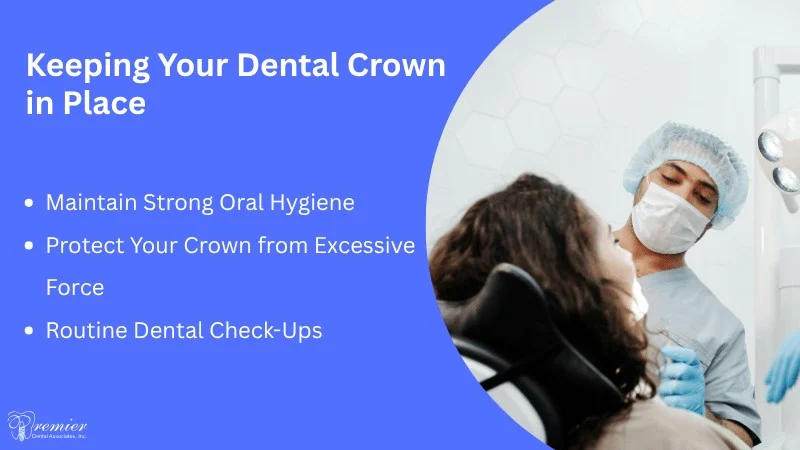
Maintain Strong Oral Hygiene
You still need to care for the natural tooth under your crown. Decay can form at the edge of the crown and weaken the bond.
Brush twice a day with fluoride toothpaste. Angle the bristles toward the gumline to clean where the crown meets the tooth.
Floss every day. Slide the floss gently along the side of the crown instead of snapping it up and down, which can loosen it over time.
You can also use an antibacterial mouth rinse if your dentist recommends it. This helps reduce bacteria that can slip under the crown margin.
Decay under a crown is a common reason it comes loose. If you notice bad breath, bleeding gums, or a bad taste near the crown, call your dentist. These signs may point to early decay or gum problems.
Protect Your Crown from Excessive Force
Dental crowns are strong, but they are not indestructible. Too much pressure can break the cement seal.
Avoid chewing ice, hard candy, or popcorn kernels. Sticky foods like caramel can also pull at the crown and loosen it.
If you grind your teeth at night, you place steady force on your crown for hours. This habit, called teeth grinding, often leads to repeated crown problems.
Ask your dentist about a custom bite guard. It creates a barrier between your upper and lower teeth and helps protect your crown from grinding damage.
Bite alignment also matters. An uneven bite can put extra force on one crown. Dentists often adjust the bite after placing a crown to prevent this issue.
Routine Dental Check-Ups
Regular dental check-ups help your dentist catch small problems before your crown falls off again.
During your visit, your dentist will:
- Check the crown’s fit
- Look for decay at the margins
- Test your bite for high pressure spots
- Examine your gums for inflammation
These steps protect your crown and the tooth underneath it.
Most people need a check-up every six months. If you have a history of loose dental crowns or teeth grinding, your dentist may suggest more frequent visits.
Routine care keeps the cement seal strong, your gums healthy, and your bite balanced. That steady maintenance gives your crown the best chance to stay in place for years.
When to Replace or Repair Your Dental Crown
You can often save a loose dental crown, but some cases call for a full replacement. The right choice depends on damage, decay, and how well the tooth underneath can still support the crown.
Recognizing Signs of Crown Failure

You should not ignore small changes in how your dental crown feels. A crown that shifts when you chew or feels higher than the rest of your teeth may have loose cement or a poor fit.
Watch for these signs:
- Pain or sensitivity when biting
- Visible cracks or chips in the crown
- A bad taste or odor near the tooth
- Swelling along the gumline
- Repeated crown loss
Decay under the crown can weaken the tooth and cause it to fail. If your dentist finds insufficient tooth structure, you may need a new crown or a buildup before placing another one.
A cracked crown sometimes allows repair, but deep fractures usually require replacement.
Consulting Your Dentist for Long-Term Solutions
You need a dental visit as soon as you notice trouble. Quick action can prevent infection and further damage.
During the appointment, your dentist will:
- Remove the loose crown
- Check for decay or cracks
- Evaluate the remaining tooth structure
- Decide if repair or replacement works best
In some cases, your dentist can clean and re-cement the same crown. You lower your risk of repeat problems by keeping up with regular dental check-ups.
These visits help your dentist spot cement wear, bite issues, or gum changes before your crown fails again.
Frequently Asked Questions
Dental crowns can loosen from bite pressure, weak cement, decay, or problems with the tooth underneath. Quick action and proper care can protect your tooth and help your next crown stay secure.
Why does my dental crown keep coming loose or falling off?
Your crown may not fit tightly against your tooth. Even small gaps can let saliva and bacteria break down the cement over time.
You may also have too little natural tooth left to hold the crown firmly. A short or badly damaged tooth does not give the crown enough grip.
Heavy biting forces can loosen it as well. Teeth grinding, clenching, or chewing hard and sticky foods can pull the crown off. Decay under the crown is another common cause.
What should I do right away if my crown falls off?
Stay calm and find the crown. Rinse it gently with water and store it in a clean container.
Look at the tooth in the mirror. If it feels sharp, cover it with dental wax or sugar‑free gum to protect your cheek and tongue.
Avoid chewing on that side. Then call your dentist as soon as possible, since quick action helps prevent more damage.
How long can I safely wait to see a dentist after a crown comes off?
You should see a dentist within a few days. The exposed tooth can crack, shift, or develop decay if you wait too long.
If you feel pain, sensitivity, or swelling, treat it as urgent. Even if it does not hurt, the tooth still needs protection.
Short delays of a day or two are usually manageable, but longer waits raise the risk of infection or the need for a new crown.
Why would a crown come off with the post attached?
A crown with a post often sits on a tooth that had a root canal. If the cement holding the post fails, the entire unit can come out together.
This can also happen if the remaining tooth structure is weak. When there is not enough strong dentin to anchor the post, it may loosen under pressure.
Your dentist may need to rebuild the core or consider a different type of restoration to improve stability.
Why does a crown on a dental implant keep coming loose?
Implant crowns do not use the same cement as natural teeth. Many attach with a small screw.
If that screw loosens from chewing forces or grinding, the crown can feel wobbly. Your dentist can often tighten it and check your bite.
In cemented implant crowns, leftover cement or bite imbalance can cause problems. Adjustments and careful cleaning usually fix the issue.
How can I keep my temporary crown from falling off before my next appointment?
Avoid sticky foods like caramel or gum. These foods can pull a temporary crown off because the cement is weaker than permanent cement.
Chew on the opposite side of your mouth. Choose soft foods and cut them into small pieces.
Brush gently around the temporary crown. When you floss, slide the floss out from the side instead of lifting it straight up to reduce the risk of dislodging it.