You leave the office feeling fine, but when the numbness fades, your bite feels off. Your teeth may hit in a new way, or one tooth may touch before the others.
That small change can feel strange and hard to ignore.
Your bite feels uneven after a new dental crown or dental filling because the restoration may sit slightly too high, or your teeth and jaw need time to adjust to the change.
Even a tiny shift in height can make one tooth take more pressure when you chew.
The good news is that this problem is common and easy to fix with a simple bite adjustment.
When you understand why it happens and what to watch for, you can protect your teeth and feel comfortable again.
Key Takeaways
- A new crown or filling can change how your teeth meet and make your bite feel uneven.
- A small high spot often causes pressure, soreness, or pain when you chew.
- A quick bite adjustment can restore comfort and prevent further problems.
Table of Content
- How Dental Work Impacts Your Bite
- Common Reasons for an Uneven or High Bite
- Symptoms and Complications of Bite Misalignment
- Diagnosis and Bite Adjustment Procedures
- Tips for Recovery and When to See Your Dentist
- Frequently Asked Questions
How Dental Work Impacts Your Bite
When you get a new filling or crown, your dentist changes the shape of a tooth. Even small changes can affect how your upper and lower teeth meet, which dentists call occlusion.
Changes Caused by Fillings and Crowns
A dental filling replaces part of your natural tooth. A dental crown covers most or all of it. Both can slightly change the height or shape of the tooth.
If the new surface sits even a fraction of a millimeter too high, your teeth may touch in a new way. You may notice that your bite feels off after dental work when you chew or close your mouth.
Some people describe it as one tooth hitting first.
Common signs include:
- A tooth that feels taller than the others
- Pressure when you bite down
- Jaw soreness after eating
- Sensitivity to cold or pressure
This does not always mean something is wrong. Changes in tooth shape from fillings, crowns, or implants can alter how your teeth come together.
Your dentist can adjust the surface by gently reshaping it. This small correction often restores a balanced bite.
The Role of Local Anesthesia in Bite Perception
Local anesthesia can make it hard for you to judge your bite right after treatment. When your lips, tongue, and cheek feel numb, your brain cannot sense pressure in the usual way.
You may bite down and think everything feels fine. Once the numbness fades, you might notice uneven contact.
This delayed awareness is common. Many patients report that a new dental filling feels strange at first, especially on the first day or two.
Mild soreness can also come from keeping your mouth open for a long time. Your jaw muscles may feel tight, which can make your bite seem uneven even when the tooth height is correct.
If the feeling lasts more than a few days or causes pain when chewing, contact your dentist for a check.
Restorative Dentistry and Bite Alignment
Restorative dentistry focuses on repairing teeth while keeping your bite stable. Your dentist checks your occlusion by asking you to bite on thin marking paper. Colored marks show where your teeth touch.
Balanced occlusion means your teeth meet evenly across both sides of your mouth. If one tooth carries too much force, it can cause discomfort, wear, or even cracks over time.
Crowns require careful shaping because they cover the full chewing surface. Even when they look natural, small shifts in contact points can change comfort.
If your bite stays uneven, your dentist can:
- Adjust high spots
- Re-polish the surface
- Re-check your occlusion in different positions
These steps help protect your teeth and keep your jaw joints working in a stable, healthy way.


Common Reasons for an Uneven or High Bite
When your bite feels uneven after dental work, a small change in height or alignment often causes it. Even a tiny shift can change how your teeth touch and how your jaw muscles react.
High Filling or High Crown Explained
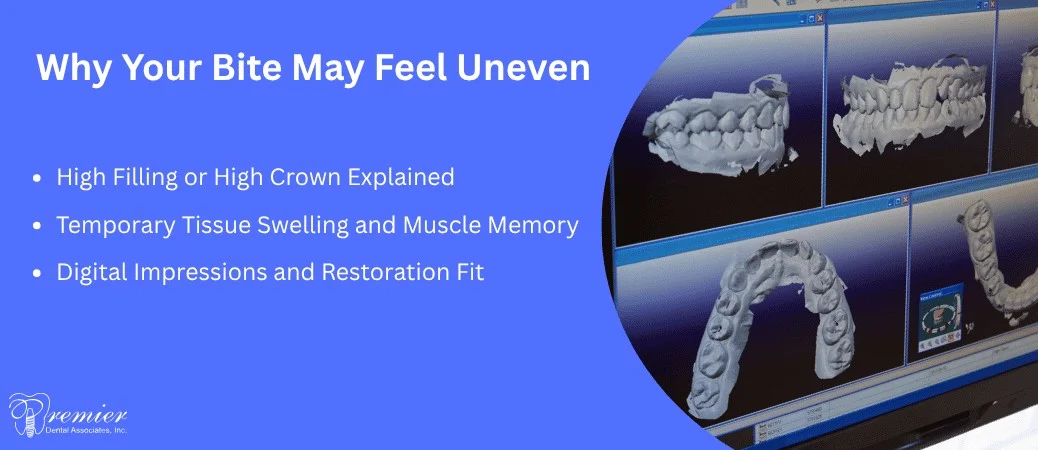
A high filling or high crown is the most common reason your bite feels uneven. This happens when the new dental work sits slightly taller than the surrounding teeth.
Even a small difference can affect your bite alignment. When you close your mouth, that one tooth may hit first. This creates extra pressure on the tooth and the jaw.
You may notice:
- Discomfort when chewing
- A feeling that your teeth do not fit together
- Sensitivity when biting down
Many dentists check your bite with marking paper before you leave. Still, numbness can make it hard for you to feel small problems right away. A quick adjustment can usually fix a high spot.
Temporary Tissue Swelling and Muscle Memory
Sometimes your restoration fits well, but your mouth needs time to adjust. Your gums and ligament around the tooth may feel sore after treatment.
This mild swelling can make your bite feel uneven for a few days. The pressure from the procedure can also irritate the tissue that supports the tooth.
Your jaw muscles also rely on memory. They are used to your old bite pattern. When you change the shape of even one tooth, your muscles must relearn how to close your mouth.
You might:
- Test your bite again and again
- Feel tension in your jaw
- Notice mild soreness
If the feeling improves within a few days, your muscles are likely adapting. If it stays the same or worsens, your dentist should recheck your bite alignment.
Digital Impressions and Restoration Fit
The fit of your crown or filling depends on how accurately your dentist records your tooth shape. Many offices now use digital impressions instead of traditional molds.
Digital scans create a detailed 3D image of your teeth. This can improve the shape and contact points of your final restoration.
Better impressions reduce the risk of:
- A high crown
- Uneven bite contact
- Poor bite alignment
Some practices use advanced scanning to create more precise crowns from the start. Even with modern tools, small adjustments are normal.
Your dentist can fine-tune the surface so your teeth meet evenly and your bite feels balanced.
Symptoms and Complications of Bite Misalignment
When your bite feels off after a crown or filling, your mouth often gives clear warning signs.
You may notice pressure on one tooth, new sensitivity, or tension in your jaw that was not there before.
Chewing Discomfort and Pressure Points
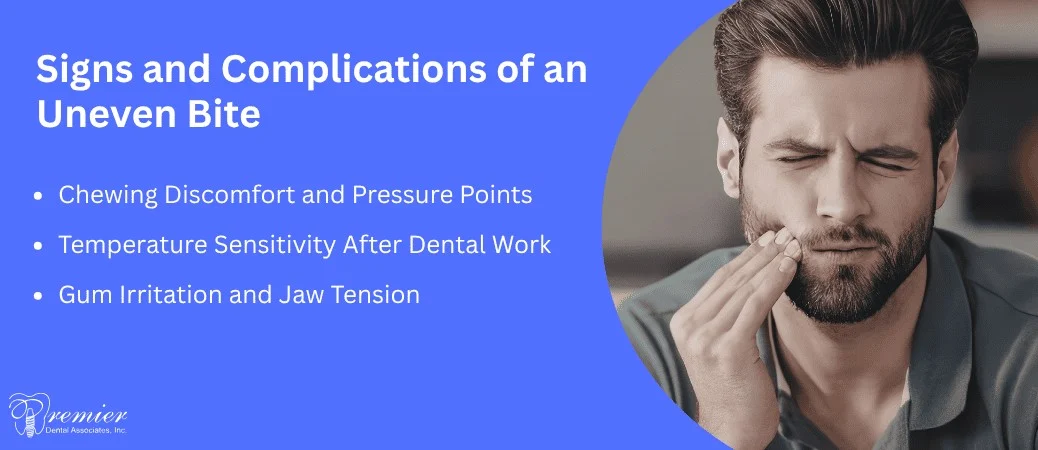
You may feel like one tooth hits first when you close your mouth. This early contact creates a small pressure point that takes more force than the other teeth.
That pressure can make your bite feel uneven, especially when you chew firm foods like bread or meat. You might avoid chewing on that side without thinking about it.
Common signs include:
- Pain when biting down
- A feeling that the tooth is “too tall”
- Soreness that gets worse during meals
Even a tiny height difference can cause bite misalignment. Teeth are very sensitive to small changes. If the pressure continues, the tooth can become tender to touch.
You may also notice mild throbbing after eating.
If your bite feels off for more than a few days, contact your dentist. A simple adjustment can smooth down the high spot and spread pressure more evenly.
Temperature Sensitivity After Dental Work
Temperature sensitivity often appears after a new filling or crown. You may feel sharp discomfort when you drink something cold or sip hot coffee.
Some sensitivity is normal for a short time. Dental work can irritate the inner part of the tooth, called the pulp. This area reacts quickly to heat and cold.
However, bite misalignment can make temperature sensitivity worse. When one tooth absorbs too much force, the inner tissue becomes more inflamed. You may notice:
- Lingering pain after cold drinks
- Sensitivity that increases when chewing
- A sharp response to sudden temperature changes
If the pain fades within seconds, your tooth may just need time to settle. If it lasts longer or grows stronger, your dentist should check your bite. Reducing excess pressure often helps calm the nerve.
Gum Irritation and Jaw Tension
An uneven bite can also affect your gums and jaw muscles. When your teeth do not meet evenly, your jaw shifts slightly to find a comfortable position.
This shift can lead to jaw tension, especially near your ears. You may wake up with soreness or mild headaches.
Gum irritation can happen around the treated tooth and lead to periodontal treatment. Extra force can press the tooth into the gum tissue, causing:
- Redness near the crown or filling
- Mild swelling
- Tenderness when brushing
If you clench or grind because your bite feels uneven, the strain can spread to other teeth. Over time, this tension may lead to muscle fatigue or clicking in the jaw joint.
A quick bite adjustment often relieves these symptoms and restores balance to your mouth.
Diagnosis and Bite Adjustment Procedures
Your dentist can check your bite in just a few minutes and make small changes that improve comfort right away. Most problems come from a tiny high spot that needs simple reshaping.
Using Articulating Paper to Identify High Spots
Your dentist uses articulating paper to find where your teeth hit too hard. This paper is thin and coated with colored ink.
You bite down and grind your teeth slightly from side to side. The paper leaves marks on the teeth that touch first or press too hard. Dark or heavy marks often point to a high spot.
This step matters because even a small height difference can strain your jaw. Many people notice this problem after a filling or crown, especially once numbness fades.
It is common for your bite to feel off after dental work when the new surface changes how your teeth meet.
The markings guide your dentist so they adjust only the exact area that needs correction.
The Bite Adjustment Process
A bite adjustment is usually quick and simple. Your dentist uses a small dental handpiece to gently smooth down the high area.
You may feel vibration and light pressure, but it should not hurt. Numbing is often not needed unless the tooth is sensitive.
After a small adjustment, your dentist asks you to bite again. They may repeat the process until your teeth meet evenly. This careful back-and-forth helps protect your crown or filling from extra force.
If your bite feels uneven after a crown, small corrections can prevent jaw pain and wear.
Experts explain that subtle changes in how teeth meet can affect comfort and chewing, especially when your bite feels off after a crown.
Most visits for bite adjustment take less than 15 minutes.
Can a High Filling Fix Itself?
You might wonder, can a high filling fix itself? In most cases, the answer is no.
Your mouth cannot reshape a filling or crown on its own. The material is hard and will not wear down evenly in a short time. Waiting often leads to more pressure on one tooth.
Some mild soreness or tight jaw muscles can improve within a few days. However, if the tooth feels clearly too high or chewing feels uneven, you likely need a small adjustment.
Dentists note that when a filling sits too high, it often needs correction rather than time, especially if your new filling feels strange.
If you ignore a high spot, you may develop tooth pain, jaw tension, or headaches. A quick visit can prevent those problems.
Tips for Recovery and When to See Your Dentist
Mild soreness and temperature sensitivity are common after a new crown or filling. Simple home steps can help, but certain signs mean you should call your dentist.
Managing Sensitivity and Soreness at Home

You may notice temperature sensitivity to cold drinks or hot foods for a few days. This often improves as the tooth settles and the nerve calms down.
Use a toothpaste made for sensitive teeth twice a day. Brush gently with a soft toothbrush to avoid more gum irritation. Avoid very hard or sticky foods on that side for about a week.
If your gums feel tender, rinse with warm salt water once or twice daily. This can reduce mild swelling around the treated tooth.
Over-the-counter pain relievers can also help if your jaw feels sore from holding your mouth open. Follow the label directions carefully.
Pay attention to how your teeth meet when you bite down. If the bite feels off after dental work but improves each day, your mouth may just need time to adjust.
Early Signs That Warrant a Follow-Up Visit
Call your dentist if your uneven bite does not improve within a few days. A crown or filling that sits too high can put extra pressure on one tooth.
Common warning signs include:
- Sharp pain when you bite or chew
- A feeling that one tooth hits first
- Ongoing jaw pain or headaches
- Sensitivity that gets worse instead of better
A slight adjustment can often fix a high spot quickly. Dentists explain that when your bite feels off after dental work, it may mean the restoration needs minor reshaping.
Frequently Asked Questions
A new crown or filling can change how your teeth meet when you bite down. Small changes in shape or height can affect your comfort, chewing, and even your jaw muscles.
Is it normal for my bite to feel different after a crown or filling?
Yes, it is common for your bite to feel different at first. Your dentist reshapes the tooth with new material, and even tiny changes can feel noticeable.
You may also still feel numb right after the visit. Numbness can make it hard to tell if your bite feels balanced until it wears off. Some people notice the difference later that day or while eating a meal.
How long does it usually take for my mouth to adjust to the new restoration?
Mild changes in how your bite feels can settle within a few days. Your teeth and jaw muscles may need a short time to adjust.
However, your mouth cannot fix a crown or filling that is too high. If the shape is off, you will likely keep feeling it until your dentist adjusts it. Many dentists explain that an uneven bite will not correct itself without treatment,.
What signs suggest my crown or filling might be too high or out of alignment?
You might feel like one tooth hits before the others when you close your mouth. The restored tooth may feel raised or taller than the rest.
You may also notice scraping when you chew or talk. Some people feel extra pressure on one side of their mouth.
These are common signs of a high spot, which dentists often describe when explaining a bite that feels off after a crown.
Can a new crown or filling cause jaw soreness, headaches, or tooth sensitivity?
Yes, it can. If one tooth hits too hard, your jaw muscles may tense up to protect your bite.
This tension can lead to jaw soreness, facial pain, or even headaches. It is also normal to have some tooth sensitivity after dental work, but ongoing pain with chewing may point to a bite issue instead of simple sensitivity.
What should I do if my teeth hit first on the restored tooth when I close my mouth?
Call your dentist and ask for a bite check. A small adjustment can often fix the problem in just a few minutes.
Your dentist will usually mark your bite and gently smooth down the high spot. The process is quick and does not always require numbing.
When should I call my dentist if my bite still doesn’t feel right?
Call if the tooth still feels high after a few days. You should also reach out if you have strong pain, trouble chewing, or feel your teeth scraping in a new way.
Do not ignore ongoing discomfort. A simple adjustment now can prevent more stress on your teeth and jaw later.