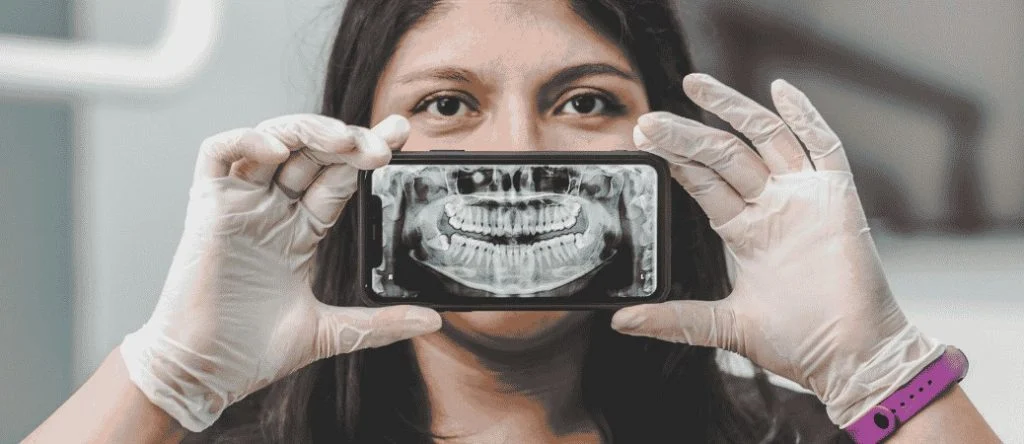


Considering dental implants with diabetes can raise questions about safety, healing, and long-term success.
Many people with type 1 or type 2 diabetes may qualify for implants when their blood sugar is well managed, their gums are healthy, and their dental and medical teams coordinate treatment.
Diabetes does not automatically rule out dental implants, but careful planning is important.
The part that needs the most attention is healing. A dental implant is a small titanium post placed in your jawbone, and your bone has to grow around it over several months.
Blood sugar during that window may affect how well the bone bonds and how easily infection takes hold.
At Premier Dental Associates, we see many patients who arrive worried that their A1C will rule them out.
Knowing what your team looks for, and what you can do before and after surgery, helps you decide whether dental implants fit your health right now or a few months from now.
Key Takeaways
- Diabetes alone rarely rules out implants, but steady blood sugar improves your odds of smooth healing.
- Healthy gums, enough jawbone, and a shared plan with your doctor come before surgery day.
- Healing takes months, and daily cleaning plus regular checkups protect the implant for years.
Can You Safely Get Dental Implants with Diabetes?
Yes, most people with well-managed diabetes can safely get implants, and the biggest risks show up when blood sugar runs high for long stretches.
Research shows good implant survival in diabetic patients, but complications like bone loss and gum inflammation around the implant are more common, and your type of diabetes matters less than how stable your glucose has been.
What Does Research Say About Implant Survival and Complications?
The news on survival is encouraging. One early study of 227 implants in 34 people found a 92.7% implant success rate for type 2 diabetic patients, which is close to what you’d expect without diabetes.
It helps to know two terms your dentist may use:
- Survival means the implant is still in your mouth.
- Success means it’s in place and the bone and gums around it are healthy, with no pain or infection.
An implant can survive while still having problems. A review of maxillofacial bone healing reported a 78% higher failure risk in diabetic patients across dental implant studies.
In a seven-year study of people with type 2 diabetes, bone loss around implants rose from 0.48 mm after 1 year to 1.12 mm later on in those with poorer glucose control.
Studies don’t all agree, so treat any single number with care. The pattern that does hold up is that steadier blood sugar lines up with better results.
Does Type 1 or Type 2 Diabetes Change Your Eligibility?
Your diagnosis type doesn’t decide eligibility on its own. Most implant research focuses on type 2 diabetes because it is far more common in adults who need tooth replacement.
With type 1 diabetes, your team pays close attention to low blood sugar around surgery, since you rely on insulin and meals may shift.
With type 2, the focus may land more on long-term A1C, weight, blood pressure, and kidney health. In both cases, your dentist asks the same core question: is your body ready to heal right now?
If you’re weighing other health factors too, our look at whether dental implants are safe for everyone covers conditions beyond diabetes.
When Might Treatment Need to Wait?
Sometimes waiting a few months gives you a better shot at a lasting result. Your team may suggest a pause if you have:
- An A1C that has stayed well above your target
- Active gum disease or infection near the implant site
- Frequent, hard-to-predict lows or highs
- Kidney disease, heart problems, or slow-healing sores elsewhere
- A history of bone-affecting medicines, such as bisphosphonates
A delay is a plan. Many people come back after working with their doctor and move forward safely.
How Do A1C and Blood Sugar Affect Implant Healing?
Your A1C gives your dental team a quick snapshot of how ready your body is to heal bone and gum tissue.
Higher readings are linked with slower bone bonding and more infection, but your daily glucose pattern and other health conditions fill in the rest of the picture.
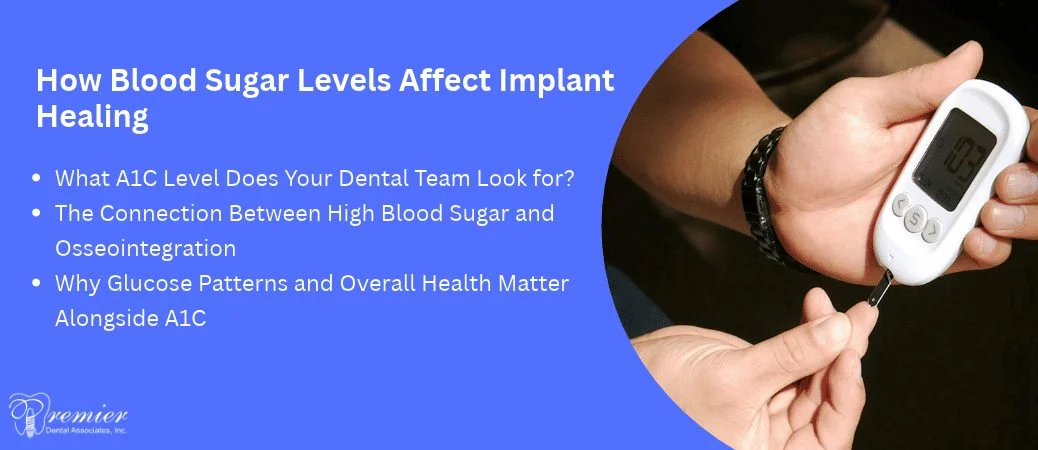
What A1C Level Does Your Dental Team Look for?
No single cutoff applies to everyone. The American Dental Association does not set one universal number for implants. Many oral surgeons feel comfortable when A1C sits below about 8 percent, and some prefer closer to 7.
These numbers are working guidelines from clinical practice, not strict rules. A recent A1C taken within a few weeks of surgery is most helpful, and researchers have used HbA1c levels taken within one month of implant surgery to track healing.
If your number is higher than your team would like, ask what range they’re aiming for and how long they think it may take to get there.
The Connection Between High Blood Sugar and Osseointegration
Osseointegration is the process of your jawbone growing tightly around the implant post. It takes roughly three to six months.
High blood sugar may slow this in a few ways:
- Small blood vessels carry less oxygen and fewer nutrients to the healing bone.
- Bone-building cells work less efficiently.
- Your immune system responds more slowly to mouth bacteria.
Animal research reviewing hyperglycaemia and titanium implant placement shows weaker bone contact around implants when glucose stays high. Human results vary more, which is why your dentist watches your healing at each visit.
Why Glucose Patterns and Overall Health Matter Alongside A1C
Your A1C is an average over about three months. Two people with the same A1C can have very different days. One may stay steady, while another swings between highs and lows.
If you use a continuous glucose monitor, bring your time-in-range report to your consult. It shows your team how your sugar behaves after meals, overnight, and during stress.
Other factors count too. Smoking, kidney function, blood pressure, and certain medicines all affect bone healing and infection risk. Your dentist looks at the whole person, with A1C as one piece.
How Should You Prepare for Implant Surgery?
Good preparation starts weeks or months before surgery, and it centers on teamwork between your dentist and your diabetes care provider.
The main steps are getting your gums healthy, checking your jawbone, planning meals and medicines for surgery day, and talking through whether antibiotics make sense for you.
Coordinate Your Dental and Diabetes Care
Your oral surgeon or periodontist (a gum and implant specialist) should know your recent A1C, the medicines you take, and who manages your diabetes. Your doctor or endocrinologist should know you have surgery coming up.
Questions you might bring to each visit:
- What A1C or glucose range do you want before surgery?
- How might my insulin or diabetes pills need to change on surgery day?
- How long will my bone take to heal in my case?
- Who should I call if my sugar runs high after surgery?
Please don’t adjust your diabetes medicines on your own. Your treating clinician should guide any change, since they know your full medical history.
Treat Gum Disease and Assess Jawbone Support
People with diabetes have an increased risk of periodontal disease, and active gum infection may need treatment before implant surgery.
Appropriate periodontal care can help address inflammation and support a healthier foundation for future implant treatment.
If you notice bleeding, puffy gums, or bad breath, those are common signs you need periodontal treatment. Treatment often starts with a deep cleaning called scaling and root planing.
Your dentist will also take 3D scans to measure your jawbone. If bone has shrunk after tooth loss, you may need a bone graft first.
Plan Medications, Meals, and Glucose Monitoring
Ask for a morning appointment if you can. Early times make it easier to plan breakfast, medicine timing, and a calm recovery day.
A simple surgery-day checklist:
- Your meter or CGM, plus extra supplies
- Fast-acting glucose like juice or glucose tabs
- Soft, cool foods ready at home
- A written list of your medicines and doses
- A friend or family member to drive you if you’re sedated
Expect your sugar to rise a bit from stress and local anesthetic. Check more often than usual that day.
Ask Whether Prophylactic Antibiotics Are Appropriate

Prophylactic antibiotics are taken before or right after surgery to lower infection risk. Some dentists give them to many implant patients, and others use them only when risk is higher.
Diabetes alone doesn’t automatically mean you need them. Your dentist weighs your blood sugar, the number of implants, whether you need a graft, and any allergies. Ask what they recommend for you and why.
What Happens During Implant Surgery and Treatment?
Implant surgery itself is usually a short visit, often done with local numbing, and the longer part comes later as your bone heals.
Whether you need a graft or can get teeth right away depends on your bone, your gums, and your blood sugar.
Implant Placement and Your Day-of-Surgery Safety Plan
Your surgeon numbs the area, opens the gum, makes a small space in the bone, and places the titanium post. A healing cap or stitches close the site. Single implants may take about an hour.
Before you start, your team checks your blood sugar. If it’s too low, they’ll give you sugar first. If it’s very high, they may reschedule to keep you safe. Speak up during surgery if you feel shaky, sweaty, or lightheaded.
For a step-by-step view of each visit, check our guide ‘what to expect when getting dental implants’.
How Bone Grafting Can Change the Treatment Timeline
Bone grafting adds material to your jaw so the implant has firm support. Sometimes the graft goes in on the same day as the implant. Other times it needs its own healing period first.
A separate graft may add several months before the implant goes in. With diabetes, your surgeon may allow extra time so both the graft and implant heal well.
Upper back teeth sometimes need a sinus lift, a type of graft that raises the sinus floor.
Why Immediate Loading Requires an Individual Assessment
Immediate loading means getting a temporary tooth on the implant the same day. It can be appealing, but it puts early pressure on an implant before bone has bonded.
Your surgeon looks at how firmly the implant holds when placed, your bone quality, and your recent glucose control.
One trial of a newer implant surface found no meaningful difference between well-controlled and poorly controlled type 2 diabetes groups at one year, but results from one study don’t apply to everyone.
Learn more about the 3 types of dental implants.
What Should You Expect During Recovery?
Recovery happens in two stages: your gums heal over a few weeks, and your bone bonds to the implant over a few months.
Steady blood sugar, gentle cleaning, and quick calls about warning signs give your implant the best start.
How Long Do Gum Healing and Bone Integration Take?
Most people notice swelling and soreness for the first two to four days. Gums often close within one to two weeks.
Bone bonding takes about three to six months. With diabetes, your dentist may wait toward the longer end before attaching your final crown.
Many people describe the discomfort as milder than they feared, and our guide on whether dental implants are painful shares what patients report.
Support Healing with Food, Glucose Monitoring, and Oral Hygiene

Plan soft, balanced meals so your sugar stays steady even while chewing is hard.
Good options include eggs, yogurt, cottage cheese, soups, mashed beans, and protein shakes. Here’s more on what to eat after dental implant surgery.
Check your glucose more often for the first week. Pain, stress, and eating less all affect your numbers.
For cleaning:
- Use the rinse your dentist prescribes, often chlorhexidine.
- Brush other teeth gently with a soft brush.
- Avoid brushing the surgery site until your dentist says it’s okay.
- Skip straws, smoking, and spitting hard for the first few days.
Which Symptoms Need a Prompt Call to Your Dentist?
Call your dental office soon if you notice:
- Swelling that gets worse after day three
- Fever, chills, or pus at the site
- Bad taste or smell that won’t go away
- Pain that grows over time
- An implant that feels loose
- Blood sugar that stays high for a day or more
High glucose that won’t come down may be an early sign of infection. Keep a list of post-op questions handy so nothing slips through.
Prevent Peri-Implantitis and Protect Your Implant Long Term
Peri-implantitis is gum infection and bone loss around an implant. People with diabetes face a higher risk, and reviews show a correlation between diabetes mellitus and peri-implantitis, especially with higher glucose levels.
Regular professional cleanings help. Research found that hygiene recall visits help protect against peri-implantitis in diabetic patients. Many dentists suggest cleanings every three to four months.
At home, use interdental brushes or water flossers around the implant. Early gum redness or bleeding is easier to reverse than later bone loss.
Plan for Implants Around Your Diabetes and Healing Needs
Implants are a realistic option for many people with diabetes when timing and planning fit your health.
Steady glycemic control, healthy gums, and enough jawbone set you up for healing, while open talks between your doctor, oral surgeon, or periodontist keep everyone working from the same plan.
If you’re ready to talk through your situation, the team at Premier Dental Associates can review your health history and imaging with you.
Bring your latest A1C and medicine list to your first consult so your plan starts with real numbers.
Frequently Asked Questions
Can I get All-on-4 dental implants if I have diabetes?
Many people with diabetes can get full-arch implants like All-on-4 when their glucose is stable and their bone can support them. These cases often use immediate teeth, so your surgeon checks your healing ability closely.
Read more about who makes good All-on-X dental implant candidates.
How long does pain usually last after dental implant surgery?
Most soreness peaks in the first two to three days and fades within a week. Pain that grows after that, or comes with fever or swelling, needs a call to your dentist.
Can I get dental implants if I have diabetes and bone loss?
Yes, bone grafting can often rebuild enough bone for an implant. It may add months to your timeline, and your team may wait for the graft to heal fully before placing the post.
What should I do if eating less after surgery causes low blood sugar?
Treat the low right away with juice, regular soda, or glucose tabs, which don’t need chewing. Then call your diabetes provider to ask about adjusting your medicine while you’re eating less, since doses shouldn’t be changed without their guidance.
Are bridges or dentures an option if implants need to wait?
Yes, a temporary denture or bridge can fill the gap while you work on gum health or blood sugar. Many people later move to implants, and comparing dentures vs dental implants can help you weigh both paths.