


Missing multiple teeth can make eating, speaking, and smiling feel uncomfortable. Many people wonder if there’s a better option than traditional dentures that slip and slide. All-on-X dental implants offer a permanent solution that looks and feels like natural teeth.
You’re likely a good candidate for All-on-X implants if you’re missing most or all of your teeth, have adequate jawbone density, and are in generally good health.
These implants use just a few strategically placed posts to support a full arch of replacement teeth. Unlike dentures that you remove each night, All-on-X implants stay in place and function just like your natural teeth did.
Determining if you’re a suitable candidate involves looking at several factors. Your dentist will check your jawbone health, gum condition, and overall medical history.
Understanding what makes someone a good fit for this treatment can help you decide if it’s the right choice for your smile.
Key Takeaways
- All-on-X implants are best for people missing several or all teeth who want a permanent alternative to dentures
- You need healthy jawbone and gums for successful implant placement and healing
- The treatment takes several months to complete but provides a long-lasting tooth replacement solution
Schedule your All-on-X consultation in Lyndhurst, Ohio today
Understanding All-on-X Implants
All-on-X implants offer a permanent way to replace a full arch of missing teeth using just a few strategically placed implants. This approach differs from removable dentures and provides options like all-on-4 or all-on-6 depending on your needs.
What Makes All-on-X Different From Traditional Dentures
Unlike traditional dentures that rest on your gums, all-on-X implants anchor directly to your jawbone using titanium posts. This means your new teeth stay securely in place without slipping or causing discomfort during meals or conversations.
Traditional dentures can move around when you eat or speak, which often causes embarrassment and makes certain foods difficult to enjoy. All-on-X implants eliminate these problems because they’re fixed permanently in your mouth.
Your jawbone also stays healthier with all-on-X implants.
When you lose teeth, your jawbone gradually shrinks because it’s not being used. Implants transfer chewing forces to your bone, which keeps it strong and prevents the sunken facial appearance that often happens with long-term denture use.
You can brush and care for all-on-X implants just like natural teeth. Removable dentures require special cleaning solutions and must be taken out at night, but your implant-supported teeth stay in your mouth 24/7.
All-on-4 vs. All-on-6: Treatment Options
All-on-4 uses four implants to support a full arch of replacement teeth in your upper or lower jaw. This option works well if you have adequate bone density and don’t need extensive bone grafting procedures.
All-on-6 uses six implants instead of four, which distributes the chewing forces across more support points. Your dentist might recommend this approach if you need extra stability or have specific bone structure considerations.
Key differences include:
- Number of implants: Four versus six titanium posts
- Bone requirements: All-on-6 may work better for patients with less ideal bone conditions
- Cost: All-on-6 typically costs more due to additional implants
- Healing time: Both options have similar recovery periods
Your dental specialist will evaluate your jawbone structure, overall health, and specific needs to recommend whether all-on-4 or all-on-6 is right for you. Both options provide excellent long-term results for full-arch restoration.
How All-on-X Restores Your Smile
All-on-X gives you a complete set of natural-looking prosthetic teeth that function like your original teeth. You’ll be able to bite into apples, chew steak, and enjoy foods that were impossible with traditional dentures.
Many patients receive their new teeth in just one day, though treatment time varies based on your individual situation. Your dentist places the implants during a surgical procedure, then attaches a temporary set of teeth while your jaw heals.
Over several months, your implants fuse with your jawbone through a process called osseointegration. This creates a strong foundation for your final set of teeth.
Once healing is complete, your dentist replaces the temporary teeth with your permanent prosthesis.
Your restored smile looks natural and feels comfortable because the teeth are custom-designed to match your facial features and bite pattern. The full-mouth restoration gives you back the confidence to smile, laugh, and speak without worrying about your teeth.
Visit Premier Dental Associates in Lyndhurst, Ohio for expert implant care
Are You a Candidate? Key Qualification Factors
All-on-X dental implants work best for people who have significant tooth loss and enough jawbone to support the implants. Your gum health also plays a major role in whether this treatment will succeed.
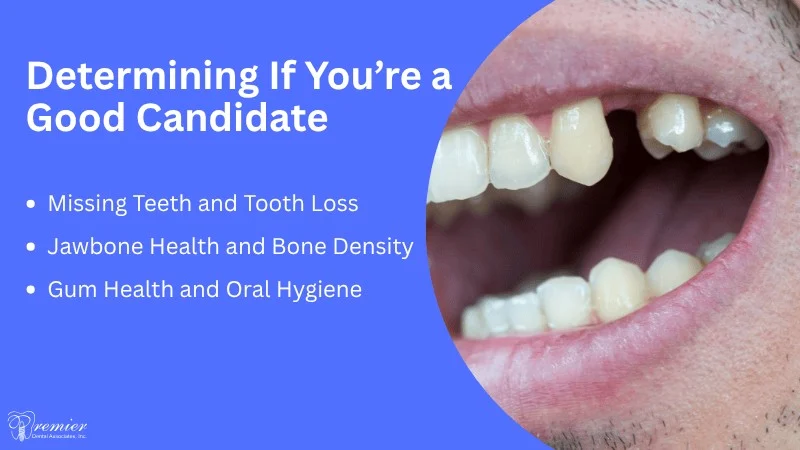
Missing Teeth and Tooth Loss
All-on-X implants are designed for people who are missing most or all of their teeth in one or both arches. You might be a good candidate if you have several failing teeth that need removal.
This treatment also works well if you currently wear dentures and want a more stable solution.
The system typically uses four to six implant posts to support a full arch of replacement teeth. You don’t need to replace each tooth individually. Instead, the entire upper or lower set of teeth attaches to these strategically placed implants.
If you only have one or two missing teeth, traditional single dental implants might be a better option for you. All-on-X is most cost-effective when you need to replace many teeth at once.
Jawbone Health and Bone Density
Your jawbone must be strong enough to hold the implant posts securely. The dentist will check your bone density during the evaluation process. If you’ve been missing teeth for a long time, your jawbone may have weakened or shrunk.
Many people who lack sufficient bone can still get All-on-X implants through bone grafting procedures. This process adds bone material to strengthen your jaw before placing the implants.
The angled placement of All-on-X implants often requires less bone than traditional implant methods.
Your dentist will use X-rays or CT scans to measure your bone structure. These images show exactly how much healthy bone you have and where the implants can be placed safely.
Gum Health and Oral Hygiene
Healthy gums are essential for successful implant dentistry. You cannot have active gum disease when getting All-on-X implants. Infections in your gums can cause the implants to fail after placement.
Your dentist will treat any existing gum problems before moving forward with the procedure. This might include deep cleaning or other treatments to eliminate bacteria and inflammation.
You must be willing to maintain good oral hygiene after getting your implants. This means brushing twice daily and cleaning around the implants as your dentist shows you. Poor cleaning habits can lead to infections that threaten your new teeth.
Start your journey to a permanent smile today
Lifestyle, Health, and Suitability Considerations
Your general health and daily habits play a major role in whether All-on-X implants will work well for you. Medical conditions, tobacco use, and your willingness to follow care instructions all affect how well osseointegration occurs and how long your implants last.

Overall Medical Health
Your body needs to be able to heal properly for the dental implant procedure to succeed. Certain health conditions can slow down healing or make complications more likely.
Uncontrolled diabetes can interfere with osseointegration, which is when the implant fuses with your jawbone. High blood sugar levels make it harder for your body to heal and fight infections.
If you have diabetes, you’ll need to work with your doctor to get your blood sugar under control before moving forward.
Autoimmune disorders like rheumatoid arthritis or lupus can also affect healing. These conditions may weaken your immune system or require medications that impact bone health.
Your dentist will review your medical history and may coordinate with your other doctors to determine if you’re ready for implants.
Heart conditions and blood disorders need special attention too. Some blood thinners can increase bleeding during surgery, while certain heart medications may need adjustment.
Smoking and Tobacco Use
Smoking significantly reduces your chances of implant success. Tobacco restricts blood flow to your gums and bones, which slows healing and makes infections more likely.
Smokers have a much higher risk of implant failure compared to non-smokers. The nicotine and other chemicals in tobacco products interfere with osseointegration. Your bone may not fuse properly with the implant, leading to loosening or complete failure.
Many dentists require patients to quit smoking several weeks before surgery and throughout the healing period. Some practices won’t perform the procedure on active smokers at all because the risks are too high.
If you use any form of tobacco, including vaping or chewing tobacco, you should discuss this honestly with your dentist during your consultation to explore your options.
Commitment to Aftercare
All-on-X implants require consistent care and maintenance to last for many years. You’ll need to commit to daily cleaning routines and regular dental visits.
Right after surgery, you must follow specific instructions about diet, medication, and oral hygiene. The first few months are critical for healing and osseointegration. Missing appointments or ignoring care instructions can lead to complications or implant failure.
Long-term maintenance includes brushing and cleaning around your implants daily. You’ll also need professional cleanings and check-ups every few months.
Denture wearers who switch to All-on-X often find the care routine different from what they’re used to, but it’s essential for protecting your investment.
Your lifestyle needs to accommodate these requirements. If you travel frequently or have difficulty keeping appointments, discuss this with your dentist beforehand.
Comparing All-on-X to Other Tooth Replacement Solutions
All-on-X dental implants offer a fixed solution using 4-6 implants per arch, while removable dentures sit on your gums and individual dental implants replace teeth one by one.
All-on-X vs. Removable Dentures
Removable dentures are the most affordable upfront option for replacing missing teeth. You can take them out for cleaning and sleeping. However, they often slip when you eat or talk, which can feel embarrassing.
All-on-X dental implants stay permanently attached to your jaw. You brush and care for them like natural teeth. They don’t move around in your mouth when you chew steak or bite into an apple.
Traditional dentures don’t preserve your jawbone, so your face may develop a sunken look over time. All-on-X implants stimulate bone growth, which helps maintain your facial structure.
Dentures typically need replacement every 5-7 years. All-on-X can last 15-25 years with proper care.
The main tradeoff is cost. Dentures cost less initially but require adhesives, adjustments, and eventual replacements. All-on-X costs more upfront but saves money long-term.
All-on-X Versus Individual Dental Implants
Individual dental implants replace each missing tooth with its own titanium post. This approach works well if you’re only missing a few teeth. When comparing full-arch restoration options, individual implants typically require 8-10 implants per arch.
All-on-X uses only 4-6 strategically angled implants to support an entire arch of teeth. This means less surgery, shorter recovery time, and lower overall cost for full-mouth restoration.
Individual implants maximize bone stimulation because you have more posts in your jaw. All-on-X still preserves bone but with fewer implant sites. Both options are fixed and permanent.
Your dentist might recommend individual implants if you have strong, healthy bone and only need several teeth replaced. All-on-X makes more sense when you’re missing most or all teeth in an arch and want faster treatment.
Benefits and Long-Term Value of All-on-X Implants
All-on-X implants offer advantages that go beyond just replacing missing teeth. They improve your daily life while protecting your oral health for years to come.
Daily Comfort and Confidence
You’ll notice the difference immediately when you restore your smile with All-on-X implants. Unlike removable dentures that slip or click when you talk, these implants stay firmly in place all day.
You can eat the foods you enjoy without worry. Steak, apples, and corn on the cob are back on the menu. All-on-X uses fewer implants to support a full arch while giving you the same strong bite force as natural teeth.
Your speech will sound clearer and more natural. You won’t deal with the mumbling or lisping that removable dentures can cause. The fixed design means no messy adhesives or nightly removal routines either.
Jawbone Preservation and Facial Structure

Your jawbone needs stimulation to stay healthy. When you lose teeth, the bone starts to shrink away.
All-on-X implants stop this bone loss through osseointegration. This is when the titanium implants fuse with your jawbone over 3 to 6 months. The implants act like natural tooth roots and keep your bone tissue active and strong.
This protects your facial structure. Without bone support, your face can develop a sunken appearance that makes you look older. The All-on-X procedure maintains your natural face shape and prevents the sagging that happens with traditional dentures.
Your jawbone health stays protected for the long term. The continuous stimulation from chewing keeps the bone dense and stable.
Durability and Maintenance
All-on-X implants are built to last decades with proper care. The titanium posts are extremely durable and resist wear from daily use.
Your maintenance routine is straightforward. Brush twice daily with a soft-bristle toothbrush and use a water flosser to clean around the gumline. Visit your dentist regularly for checkups and professional cleanings.
Daily care tasks:
- Brush morning and night
- Floss or use a water flosser
- Rinse with recommended mouthwash
- Avoid chewing ice or hard objects
The upfront cost is higher than dentures, but you save money over time. Traditional dentures need replacement every 5 to 7 years and require adhesives and adjustments.
All-on-X implants eliminate these ongoing expenses while giving you a permanent solution that won’t need replacing.
Frequently Asked Questions
People considering All-on-X implants often have similar concerns about their eligibility, from jawbone density and medical conditions to age and lifestyle habits. Understanding these factors helps you know what to expect during the evaluation process.
What determines eligibility for All-on-X dental implants?
Your eligibility depends on several key factors. The most important include having sufficient jawbone to support the implants, good overall health, and realistic expectations about the treatment.
Dental professionals look for patients who have lost most or all of their teeth in one or both arches. You also need healthy gums or gums that can be treated before the procedure.
Your commitment to oral hygiene matters too. All-on-X implants require regular cleaning and professional checkups to stay healthy long-term.
Are there any medical conditions that disqualify someone from getting All-on-X implants?
Certain health conditions can make All-on-X implants more challenging, but they don’t always disqualify you completely. Uncontrolled diabetes can slow healing and increase infection risk.
Active cancer treatment, radiation therapy to the jaw area, and certain autoimmune diseases may require special consideration. Heavy smoking can also affect healing and implant success rates.
Your dentist will review your complete medical history during consultation. Many conditions can be managed or treated to make you a better candidate.
How can I tell if my jawbone is strong enough for All-on-X implants?
You can’t determine bone strength on your own. Your dentist will use special imaging to assess your jawbone.
A 3D X-ray or CT scan shows the exact amount and quality of bone available. These images reveal bone density, height, and width in different areas of your jaw.
The good news is that All-on-X works even with some bone loss. The implants are placed at strategic angles to maximize the bone you have. This often eliminates the need for bone grafting procedures.
What is the process of evaluating a patient for All-on-X implants?
The evaluation starts with a comprehensive oral exam. Your dentist examines your teeth, gums, and overall mouth health.
You’ll need detailed imaging of your jaw. This typically includes panoramic X-rays and 3D scans to map out your bone structure precisely.
Your dentist will also discuss your medical history, current medications, and lifestyle habits. Some practices offer a free initial consultation that includes the exam and X-rays.
After reviewing all this information, your dentist creates a personalized treatment plan and discusses whether you’re a good candidate.
How does age impact the suitability for All-on-X dental implants?
Age alone doesn’t disqualify you from getting All-on-X implants. Your overall health matters more than the number on your birth certificate.
Younger patients need to wait until their jawbone has finished growing, usually by the late teens or early twenties. Older adults can be excellent candidates as long as they’re healthy enough for surgery.
Many seniors successfully receive All-on-X implants. The key is having sufficient bone density and the ability to heal properly after the procedure.
What lifestyle factors might affect the success of All-on-X dental implants?
Smoking is the biggest lifestyle factor that affects implant success. It reduces blood flow to your gums and slows healing after surgery.
Your oral hygiene habits play a major role too. You need to brush daily, clean around the implants, and keep regular dental appointments.
Diet also matters during healing. You’ll need to follow a soft food diet initially and gradually return to normal eating. Heavy alcohol use can interfere with healing and increase complications.
Your ability to commit to proper aftercare directly impacts how well your implants perform over time.