Your jaw should not hurt more each week. If your TMJ pain keeps getting worse, you need to pay attention. The temporomandibular joint controls how you talk, chew, and yawn, so when it flares up, daily life feels harder.
If your TMJ pain is getting worse, start with gentle self-care like soft foods, heat or ice, and stress control, and seek professional treatment if pain, locking, or limited movement continues.
Acting early can help prevent more damage and reduce long-term discomfort from temporomandibular disorder.
You may notice more clicking, stiffness, headaches, or trouble opening your mouth. These changes often signal that your TMJ needs more support. Knowing what steps to take now can help you feel more in control and protect your jaw.
Key Takeaways
- Worsening TMJ pain often shows up as more stiffness, clicking, or trouble opening your mouth.
- Simple home care can ease strain, but ongoing pain may need medical treatment.
- Early action helps protect your temporomandibular joint and improve daily comfort.
Table of Content
- Recognizing When TMJ Symptoms Are Worsening
- Understanding the Causes Behind Increased TMJ Pain
- Effective At-Home Strategies for TMJ Relief
- Professional Treatment Options for Persistent TMJ Pain
- When to See a Specialist and Living Well with TMJ
- Frequently Asked Questions
Recognizing When TMJ Symptoms Are Worsening
When TMJ pain gets worse, your body usually gives clear signs. You may notice stronger pain, new symptoms, or changes that start to affect your daily routine.
Common Progression of TMJ Disorders
TMJ disorders often start with mild jaw pain or stiffness. You might feel jaw tension in the morning or hear light jaw clicking when you chew.
As the problem grows, the pain can last longer and spread. You may feel facial pain near your cheeks, temples, or ears. Headaches can become more frequent, especially after talking or eating.
Some people develop chronic TMJ, where symptoms stay for months. Your temporomandibular joints may feel sore even when you are not moving your jaw. Chewing tough foods can trigger sharp pain.
The symptoms of TMJ disorder often include:
- Ongoing jaw pain
- Pain while chewing
- Jaw clicking with discomfort
- Limited mouth opening
If these signs become more intense or happen more often, your condition may be progressing.
Red Flags That Indicate Serious Jaw Problems
Some TMJ symptoms need quick medical care. These signs suggest more than simple jaw tension.
Watch for:
- Jaw locking that prevents you from opening or closing your mouth
- Sudden, severe jaw pain
- Swelling around the joint
- Pain that does not improve with rest
If your jaw locks in place or shifts out of alignment, you may have joint damage. Injury, arthritis, or disk problems inside the temporomandibular joints can cause this.
These red flags point to possible temporomandibular joint dysfunction that needs professional treatment.
How TMJ Pain Can Affect Daily Life
Worsening TMJ disorder can slowly change how you live each day. Simple tasks may become difficult.
You may avoid certain foods because chewing hurts. Talking for long periods can trigger jaw pain or headaches. Some people feel ear pressure or tooth pain along with facial pain.
Sleep can also suffer. Jaw tension and teeth grinding at night often increase morning pain. Poor sleep then makes you more sensitive to discomfort the next day.
Over time, chronic TMJ can affect your mood. Ongoing pain may cause stress, which can tighten your jaw muscles even more. This cycle keeps the symptoms active.
If your jaw pain starts to limit eating, speaking, or sleeping, it is a clear sign that your condition is getting worse and needs attention.
Understanding the Causes Behind Increased TMJ Pain
Your jaw pain often gets worse because of repeated strain on the temporomandibular joint and the muscles around it.
Habits like clenching, bite problems, and daily stress can all increase pressure on the joint and trigger stronger symptoms.
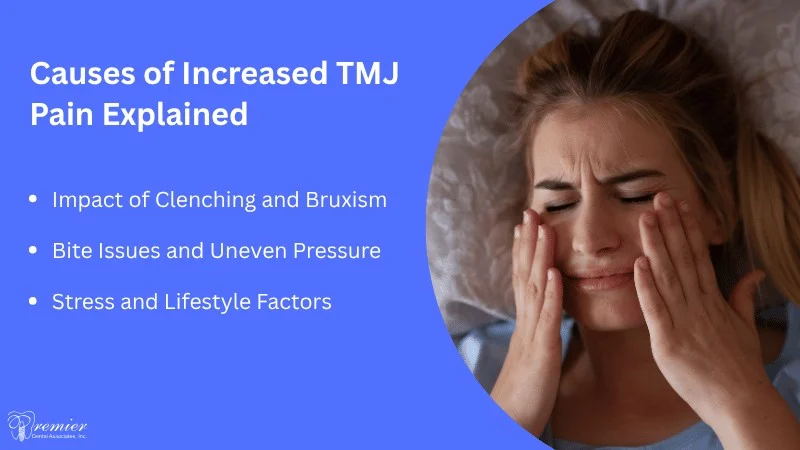
Impact of Clenching and Bruxism
If you clench your jaw during the day or grind your teeth at night, you put steady force on your temporomandibular joint. This habit, known as bruxism, can strain the muscles that control jaw movement.
Over time, clenching and teeth grinding can lead to:
- Muscle fatigue and tightness
- Increased jaw pain in the morning
- Headaches near your temples
- Ear or facial soreness
Teeth grinding and clenching often play a key role in temporomandibular disorder symptoms.
When you keep your teeth pressed together, your jaw muscles never fully rest. This constant tension can inflame the joint and make existing TMD pain feel sharper and more frequent.
Bite Issues and Uneven Pressure
An uneven bite can shift extra pressure onto one side of your jaw. When your upper and lower teeth do not fit together evenly, your temporomandibular joint must adjust with every chew or bite.
This imbalance can:
- Strain one joint more than the other
- Irritate the cartilage inside the joint
- Increase clicking, popping, or locking
- Worsen jaw pain during meals
The temporomandibular joint works like a sliding hinge. Problems that disrupt how muscles, bones, and joints work together can lead to pain and dysfunction.
If your bite places uneven force on the joint, the stress builds over time. That extra pressure can make temporomandibular disorders harder to ignore and more painful during normal activities.
Stress and Lifestyle Factors
Stress does more than affect your mood. It often leads you to tighten your jaw without noticing.
You may clench while driving, working, or sleeping. Many people with TMD report higher pain levels during stressful periods. Muscle tension and jaw dysfunction commonly occur together.
Certain habits can also raise your risk:
- Chewing gum for long periods
- Biting nails or pens
- Leaning your chin on your hand
- Smoking
These actions keep your jaw muscles active when they should rest. When stress and daily habits combine with clenching or bite problems, your jaw pain can increase in both intensity and frequency.
Effective At-Home Strategies for TMJ Relief
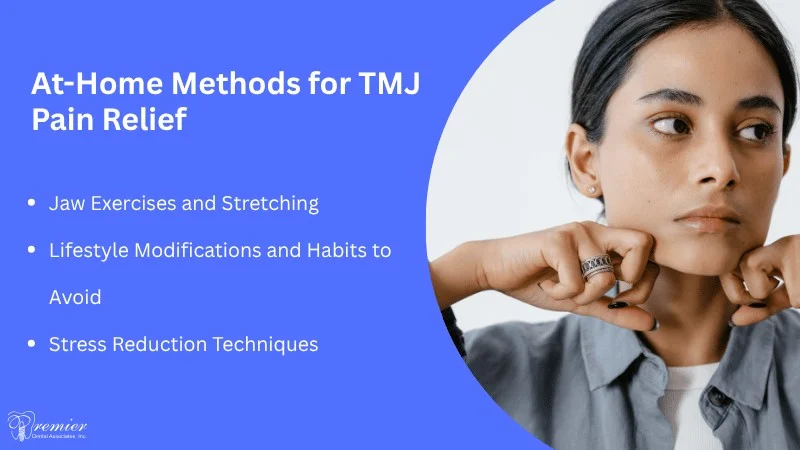
You can ease TMJ pain at home with simple daily actions. Gentle jaw exercises, smart habit changes, and stress control can reduce jaw tension, limit jaw clicking, and lower facial pain.
Jaw Exercises and Stretching
Gentle jaw exercises can reduce stiffness and improve movement. They work best when you move slowly and stay within a pain-free range.
Try this basic stretch:
- Place your tongue on the roof of your mouth.
- Open your mouth slowly while keeping your tongue in place.
- Hold for six seconds, then close.
- Repeat six times, up to four times a day.
This stretch helps control wide opening and may reduce jaw clicking.
You can also do side-to-side movements. Open your mouth slightly and move your lower jaw left and right in a slow, steady motion. Stop if your tmj pain increases.
Many dentists recommend exercises as part of TMJ treatment options to release jaw tightness. If pain gets worse or you feel locking, stop and call your provider.
Lifestyle Modifications and Habits to Avoid
Your daily habits can either relieve TMJ pain or make it worse. Small changes often bring steady improvement.
Start with food. Choose soft foods like eggs, yogurt, rice, and cooked vegetables. Avoid tough meats, hard bread, nuts, and chewy candy. These foods strain your joint and increase jaw tension.
You should also avoid chewing gum. Repeated chewing stresses the joint and muscles.
Pay attention to teeth grinding. If you wake with sore jaw muscles or headaches, you may clench at night. Talk to your dentist about a night guard.
Watch your posture too. Keep your head over your shoulders, not pushed forward. Good posture lowers pressure on your jaw and neck.
Stress Reduction Techniques
Stress often triggers teeth grinding and jaw tension. If you live with TMJ, managing stress becomes part of daily care.
Try slow breathing:
- Inhale through your nose for four seconds.
- Hold for four seconds.
- Exhale slowly for six seconds.
- Repeat for five minutes.
This lowers muscle tension in your face and neck.
You can also place a warm, moist compress on the side of your face for 10 to 15 minutes. Heat relaxes tight muscles and may ease facial pain.
Simple steps like limiting screen time before bed and keeping a steady sleep schedule also help. When you reduce stress, you often reduce the symptoms of TMJ, including jaw pain and muscle tightness.
Professional Treatment Options for Persistent TMJ Pain
When your pain does not improve with home care, you may need targeted treatment. Dentists and doctors use devices, medications, therapy, and in some cases procedures to reduce stress on the joint and control inflammation.



Dental Devices and Custom Night Guards
If you grind or clench your teeth, your dentist may suggest a night guard, also called a mouth guard or dental splint. This device fits over your teeth and reduces pressure on the jaw joint while you sleep.
A custom night guard offers a better fit than store-bought versions. Your dentist takes impressions of your teeth to create a device that matches your bite. This can help lower muscle tension and protect your teeth from damage.
Many providers recommend oral splints as part of TMJ treatment options for jaw pain. You may need to wear the device at night or, in some cases, during the day.
These devices do not cure temporomandibular disorder, but they often reduce pain and limit further joint strain.
Medications and Therapies
Medication can help when pain flares up or becomes constant. Over-the-counter anti-inflammatory drugs may ease swelling and soreness.
If those do not help, your provider may prescribe muscle relaxants for short-term use. These drugs can reduce jaw muscle spasms that add pressure to the joint.
Some people benefit from low-dose antidepressants used for chronic pain.
Physical therapy also plays a key role. A therapist can guide you through stretching and strengthening exercises.
Treatments may include transcutaneous electrical nerve stimulation (TENS) to reduce pain signals and improve muscle control.
You may attend therapy several times a week at first, then switch to home exercises as symptoms improve.
Advanced and Surgical Interventions
If conservative care fails and your pain keeps getting worse, your doctor may discuss procedures. These options target joint inflammation or structural problems.
Arthrocentesis uses small needles to flush fluid through the joint. This helps remove debris and reduce inflammation.
TMJ arthroscopy involves inserting a thin camera and small tools into the joint. This approach can treat scar tissue or improve joint movement with fewer risks than open surgery.
More invasive procedures include modified condylotomy, which changes the lower jaw bone to ease pressure, and open-joint surgery to repair or replace parts of the joint.
These carry higher risks, so you should review benefits and possible complications with a trained oral and maxillofacial surgeon before moving forward.
When to See a Specialist and Living Well with TMJ
Worsening jaw pain can signal a deeper problem with your temporomandibular joint. Knowing when to seek expert care and how to manage chronic TMJ can protect your jaw and improve daily comfort.

Signs You Need Medical Attention
You should not ignore pain that lasts more than a few weeks or keeps coming back. Ongoing pain can point to a more serious temporomandibular disorder (TMD).
Watch for these warning signs:
- Jaw locking in an open or closed position
- Severe pain that spreads to your ear, neck, or head
- Trouble chewing or opening your mouth fully
- Swelling on one side of your face
- A sudden change in how your teeth fit together
If your pain keeps getting worse despite home care, schedule an exam. A doctor or dentist may check your bite, feel your jaw joints, and review your symptoms.
Seek prompt care if pain becomes sharp, constant, or linked with fever or injury. Early treatment can lower your risk of joint damage and long-term problems tied to chronic TMJ.
Long-Term Management and Support
Living with TMJ often means managing symptoms over time. Many people control chronic TMJ with simple, steady habits.
Focus on these steps:
- Eat soft foods and cut food into small pieces
- Avoid gum, chewy snacks, and wide yawning
- Practice gentle jaw stretches and moist heat
- Keep your teeth slightly apart when resting
If pain persists, an oral and maxillofacial surgeon may offer added support through splints, therapy, or other care.
Stress control also matters. Jaw clenching can worsen TMD. Try slow breathing or guided relaxation to ease muscle tension.
Regular follow-up visits help track changes and adjust your plan. With steady care, you can reduce flare-ups and stay active while living with TMJ.
Frequently Asked Questions
Jaw joint pain can flare up for clear reasons like stress, teeth grinding, or changes in your bite. You can often ease mild pain at home, but some signs mean you should seek medical care.
What are the most common reasons jaw joint pain can suddenly get worse?
Stress often leads you to clench or grind your teeth without noticing. This puts extra pressure on your jaw joint and muscles.
A recent injury, even a minor one, can also trigger more pain. Chewing hard foods or opening your mouth wide for long periods may strain the joint.
Inflammation inside the joint can increase as well. TMJ pain may come and go, and some cases worsen enough to need medical care.
Which everyday habits and foods can make jaw pain and clicking worse?
Chewing gum often keeps your jaw muscles working all day. This can raise muscle tension and increase clicking or soreness.
Hard, chewy, or sticky foods like bagels, steak, or caramel can strain the joint. Large bites and wide yawns can also trigger pain.
Leaning on your chin or holding your phone between your shoulder and ear may shift your jaw out of a relaxed position. Over time, these small habits add stress to the joint.
How can I tell if my jaw pain is serious enough to see a doctor or dentist?
You should seek care if your pain lasts more than a few weeks or keeps getting worse. Locking of the jaw or trouble opening your mouth is another warning sign.
Swelling, severe headaches, ear pain, or changes in how your teeth fit together also deserve attention.
If home care does not help, book an appointment. Early care can prevent long-term joint damage.
What at-home stretches or exercises are safe to try for jaw pain relief?
Start with gentle jaw stretches. Slowly open your mouth as far as feels comfortable, hold for a few seconds, then close it.
You can also place your tongue on the roof of your mouth and let your teeth rest apart. This relaxed position reduces muscle tension.
Moist heat for 15 to 20 minutes can ease tight muscles. Repeated heat and stretching during the day may reduce pain.
Avoid forceful movements. Stop any exercise that increases pain.
How long does jaw joint pain usually last, and when should I expect improvement?
Mild TMJ pain often improves within a few days to a few weeks with rest and diet changes. Stress control and avoiding hard foods can speed recovery.
Some cases last months, especially if you keep clenching or grinding. Pain that does not improve after several weeks of self-care needs medical review.
TMJ symptoms can come and go. If you notice a steady pattern of worsening pain, do not wait too long to seek help.
What treatment options are available if a night guard, rest, and home care aren’t helping?
Your provider may suggest prescription anti-inflammatory drugs or short-term muscle relaxants. Low doses of certain antidepressants may also help with pain or grinding.
Physical therapy can guide you through targeted stretching and strengthening. Some people benefit from ultrasound or electrical stimulation.
In more severe cases, procedures such as joint flushing or injections may be used.