Dentures are a big investment in your comfort and confidence, so it makes sense to wonder how long they’ll actually last.
Most dentures last between 5 to 10 years, depending on the type, how well you care for them, and how much your mouth changes over time.
Even if your dentures still look fine, they might be wearing down in ways you don’t notice right away.
Your mouth doesn’t stay the same after you get dentures. When considering how long do dentures last, it is important to understand that your gums and jawbone naturally shrink over time.
These changes can affect the way your dentures fit, even if they felt comfortable at first.
Knowing when to get a simple repair versus when it’s time for a full replacement can save you from dealing with sore spots, embarrassing slips, and unnecessary costs.
The good news is that you have more control than you think. The way you clean, store, and handle your dentures every day plays a huge role in how long they’ll serve you well.
This guide will walk you through what affects denture lifespan, warning signs to watch for, and practical steps to help your dentures last as long as possible.
Key Takeaways
- Dentures typically last 5 to 10 years before needing replacement due to wear and changes in your mouth
- Daily care habits like gentle cleaning and proper storage can significantly extend your denture’s lifespan
- Regular dental exams help catch fit issues and minor damage early before they turn into bigger problems
Table of Content
- Understanding the Average Lifespan of Dentures
- Key Factors That Influence Denture Longevity
- Recognizing When Dentures Need Adjustment, Repair, or Replacement
- Types of Dentures and Their Unique Lifespans
- Best Practices for Denture Maintenance and Extending Lifespan
- Frequently Asked Questions
Understanding the Average Lifespan of Dentures
Most dentures last between 5 to 10 years with proper care, though full dentures typically outlast partial dentures. The materials used in your dentures and how your mouth changes over time play major roles in how long they’ll serve you well.
Typical Duration for Full and Partial Dentures
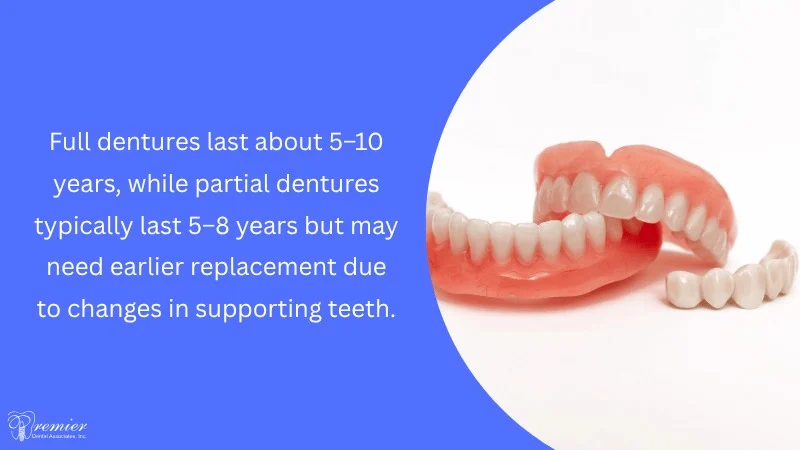
Full dentures generally last longer than partial dentures. Most dentists say full dentures last 5 to 7 years before needing replacement.
Research shows that upper dentures last about 10.3 years on average, while lower dentures last around 8.6 years. When you have both upper and lower dentures, the average lifespan is roughly 10.8 years.
Partial dentures typically last around 5 to 8 years. They often need replacement sooner because they depend on your remaining natural teeth.
If those teeth develop cavities, shift position, or need extraction, your partial dentures won’t fit properly anymore.
Important factors that affect duration:
- How well you clean and care for your dentures
- Whether you use removable dentures
- How carefully you handle them
- Your regular dental checkups
Some people keep the same dentures for 15 or even 20 years, but this is rare. Going beyond 10 years is the exception rather than the rule.
How Material and Type Affect Denture Longevity
The materials in your dentures directly impact how long they last. Most denture teeth are made from acrylic resin, which wears down over years of chewing and use.
Conventional dentures made entirely of acrylic have a shorter lifespan than other options. The acrylic base and teeth gradually develop tiny cracks and pores from daily cleaning and handling.
Implant-supported dentures last longer because they’re anchored to dental implants in your jawbone. These can function well for 10 to 15 years or more since they don’t rely on suction or adhesive.
The denture type matters too. Immediate dentures placed right after tooth extraction often need replacement sooner because your gums and bone change shape significantly during the first year of healing.
The Role of Fit and Mouth Changes in Lifespan
Your mouth doesn’t stay the same after you lose your teeth. Bone resorption happens when your jawbone slowly shrinks in height and width because it no longer supports natural teeth.
This process affects your denture fit over time. You might notice you need more adhesive to keep them in place, or they start to slip and wobble when you eat or talk.
Even perfectly fitted dentures will eventually become loose as your gums and bone reshape. The upper jaw typically loses bone slower than the lower jaw, which is why lower dentures often feel looser sooner.
Signs your mouth has changed:
- Your dentures click or move when you chew
- You develop sore spots on your gums
- Food gets trapped under your dentures more often
- Your facial appearance looks different
Getting your dentures relined can help extend their lifespan when bone resorption causes fit problems. However, if the changes are too significant, you’ll need new dentures made to match your current mouth shape.
Key Factors That Influence Denture Longevity
The lifespan of your dentures depends on the materials they’re made from, how you care for them each day, and natural changes happening in your mouth. Understanding these factors helps you get the most years out of your dentures.

Material Quality and Wear
The type of material your dentures are made from plays a big role in how long they last. Metal-based dentures are more durable than acrylic ones, though acrylic dentures remain popular because they cost less.
Common denture materials and their durability:
- Full acrylic dentures – affordable but more prone to cracks and wear
- Metal-based partials – stronger and last longer than flexible options
- Flexible partials – comfortable but may stretch or discolor over time
Over time, the teeth on your dentures flatten from chewing. Small cracks can form in the base that you might not notice right away.
These problems happen faster with lower-quality materials or when your dentures experience heavy bite pressure during meals.
Impact of Daily Habits and Care
How you handle and clean your dentures each day affects how many years they’ll last. Proper denture care prevents damage that can shorten their lifespan.
Daily habits that protect your dentures:
- Clean them over a towel or water-filled sink to prevent breaks from drops
- Use a soft brush with denture cleanser, not regular toothpaste
- Soak them overnight in denture solution to keep them from drying out
- Rinse after eating to remove food particles
Avoid using hot water, which can warp the denture base. Skip bleach and household cleaners too. Many dentures break during denture cleaning when they’re dropped on hard bathroom floors.
Your eating habits matter as well. Chewing hard foods like ice or sticky candies puts extra stress on the material and can cause cracks.
Bone Changes and Gum Resorption
Your jawbone and gums naturally shrink after you lose your teeth. This process, called bone resorption, changes the shape of your mouth over time.
A denture that fits perfectly when new can become loose dentures within a few years as your jaw changes. The denture can’t seal properly against your gums anymore, which causes it to slip or rock when you eat or talk.
Bone loss is one of the biggest hidden reasons dentures lose their fit. When the fit becomes poor, you might notice sore spots or pressure points. You may find yourself using more adhesive than before.
Regular denture checkups help catch fit problems early. Your dentist can add a reline to restore the fit before the looseness causes bigger issues.
Role of Remaining Natural Teeth
If you wear partial dentures, the health of your remaining natural teeth affects how long your partials will last. The clasps on partial dentures attach to your natural teeth for support.
When those natural teeth develop cavities, loosen, or shift position, your partial denture won’t fit as well. You might need adjustments or even new dentures if you lose more teeth.
Learning how to floss and brush helps your partials last longer. Regular dental visits let your dentist check both your natural teeth and how your partial denture fits around them.


Recognizing When Dentures Need Adjustment, Repair, or Replacement
Your mouth changes over time, which means your dentures need regular attention to stay comfortable and functional.
Knowing the difference between when you need a simple adjustment, a repair, or a full replacement can save you from discomfort and help you maintain good oral health.
Signs of Ill-Fitting or Loose Dentures
Loose dentures are one of the clearest signs that something needs to change. Your jawbone and gums naturally shrink and shift after tooth loss, which causes dentures that once fit perfectly to become loose over time.
You might notice your dentures slipping while you talk or chew, even when you use adhesive. This movement can make eating difficult and speaking embarrassing.
Other signs of ill-fitting dentures include:
- Clicking sounds when you talk or eat
- Food getting trapped under your dentures
- Needing more adhesive than you used to
- Difficulty biting into foods you could eat before
If you experience these issues, schedule a denture checkup with your denturist. They can determine whether you need a denture reline to adjust the fit or if it’s time for new dentures.
Visible Damage and Discomfort
Cracks, chips, and worn teeth are clear signs your dentures need attention. Even small cracks can grow larger and weaken the entire structure of your dentures.
Pain or soreness in your mouth means your dentures aren’t fitting right. You shouldn’t experience constant discomfort from your dentures. Sore spots, irritation, or pressure points can lead to ulcers or infections if left untreated.
Watch for these warning signs:
- Visible cracks or chips in the denture material
- Worn-down teeth that make chewing harder
- Persistent bad odor even after cleaning
- Stains that won’t come out with regular cleaning
Minor denture repairs can fix small chips or cracks. However, significant damage usually means you need denture replacement to avoid further problems.
When to Choose Relining Versus Replacement
A denture reline adjusts the base of your dentures to match changes in your gums and jawbone. This process adds new material to the underside of your dentures to improve the denture fit without replacing the entire appliance.
Relining works best when:
- Your dentures are less than 5 years old
- The teeth are still in good condition
- Only the fit has changed
- There’s no visible damage to the denture structure
Full denture replacement becomes necessary when the dentures show significant wear, have multiple cracks, or are more than 7-10 years old.
Your denturist will examine your mouth and dentures to recommend the best option for your situation.
If you’re having trouble chewing or speaking clearly, don’t wait to get help. These problems affect your nutrition and confidence in daily life.
Types of Dentures and Their Unique Lifespans
Different types of dentures have different lifespans based on their design and how they attach to your mouth. Full dentures typically last 5 to 10 years, while partial dentures can last up to 15 years with proper care.
Conventional Full Dentures
Full dentures replace all teeth in your upper or lower jaw. These conventional dentures typically last between 5 and 7 years before you need a replacement.
The acrylic base that holds the artificial teeth gradually wears down over time. Your jawbone also changes shape as the years pass, which means your dentures won’t fit as well as they once did.
Most conventional dentures are made from acrylic resin. This material is durable enough for daily use but isn’t meant to last forever. You’ll notice wear patterns on the teeth surfaces after several years of chewing.
Common signs your full dentures need replacement:
- Loose fit that causes slipping
- Visible cracks in the base
- Worn down tooth surfaces
- Difficulty chewing certain foods
- Changes in your facial appearance
Partial Dentures and Their Durability
Partial dentures can last up to 15 years when you take care of them properly. These removable appliances fill in gaps where you’re missing several teeth.
Partial dentures use metal clasps or precision attachments to hook onto your remaining natural teeth. The metal framework makes them more durable than full dentures. The longer lifespan comes from the added stability your natural teeth provide.
You still need to replace partial dentures eventually. Your mouth continues to change shape, and the clasps can wear out or break. The artificial teeth also experience wear from daily chewing, just like conventional dentures.
Implant-Supported Solutions
Implant-supported dentures attach to dental implants that are surgically placed in your jawbone. These solutions can last 10 to 15 years or longer because the implants prevent bone loss and provide stable support.
The dental implants themselves can last a lifetime if they integrate properly with your bone. You may need to replace the denture portion that attaches to the implants every 10 to 15 years as it wears down.
Key advantages of implant-supported dentures:
- More stable than conventional dentures
- Better chewing ability
- Prevents jawbone deterioration
- Fewer adjustments needed over time
The higher cost of implant-supported options is offset by their longer lifespan and improved function. Your jawbone stays healthier because the implants stimulate bone growth like natural tooth roots.
Best Practices for Denture Maintenance and Extending Lifespan
Taking care of your dentures daily and getting regular checkups can help them stay comfortable and functional for years.
Simple habits like gentle cleaning, safe storage, and avoiding hard foods make a real difference in how long your dentures last.
Proper Cleaning and Storage
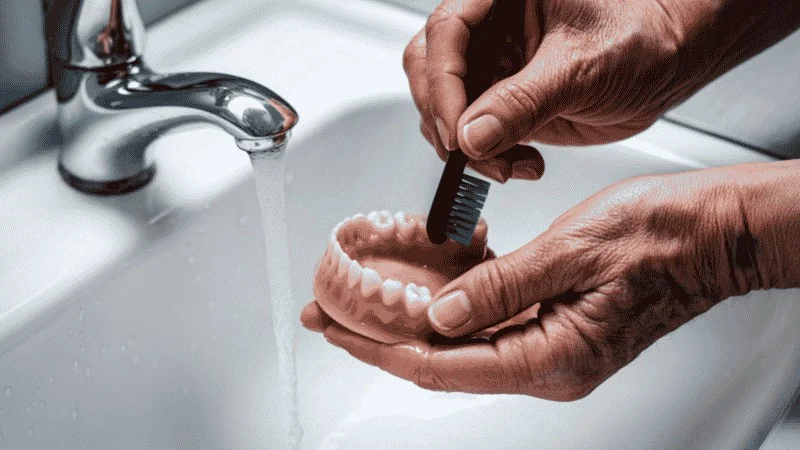
Clean your dentures every day to remove food particles, plaque, and bacteria. Use a soft-bristle brush designed for denture cleaning and a non-abrasive denture cleanser. Regular toothpaste is too harsh and can scratch the surface.
Rinse your dentures after every meal when possible. This prevents food from drying on the surface and causing stains or odors.
Handle your dentures over a folded towel or sink filled with water. This protects them from cracking if you accidentally drop them during cleaning.
Overnight storage matters for denture care. Soak your dentures in a denture-safe solution or plain water to keep them moist. Letting them dry out can cause warping and permanent damage to the fit.
Never use hot water, bleach, or household cleaners on your dentures. Hot water can deform the base, while harsh chemicals can weaken the material and cause discoloration.
Routine Professional Checkups
Schedule annual denture checkups even if your dentures feel fine. Your dentist can spot early signs of wear, cracks, or fit issues that you might miss.
Regular visits help catch problems before they turn into expensive denture repairs. Small cracks can grow quickly under normal biting pressure, so early detection saves you money and prevents sudden breakage.
Your mouth changes over time as your gums and jawbone shrink. A dentist can assess whether you need a reline to improve denture fit without replacing the entire set.
Professional deep cleanings during checkups remove buildup that regular brushing might miss. This keeps your dentures hygienic and helps prevent irritation or infections in your mouth.
The American College of Prosthodontists recommends routine evaluations to ensure your dentures remain safe and comfortable throughout their lifespan.
Avoiding Common Damaging Habits
Certain foods and habits can shorten your dentures’ lifespan significantly. Avoid chewing ice, hard nuts, sticky candies, and other foods that put excessive stress on the acrylic material.
Don’t use your dentures to open packages or bite non-food items. This can cause immediate cracks or weaken the structure over time.
Using too much denture adhesive can actually mask fit problems and lead to uneven pressure distribution. If you’re relying on adhesive daily, schedule a checkup to see if you need a denture replacement or adjustment.
Never sleep with your dentures in unless your dentist specifically recommends it. Your gums need time to rest and recover from the pressure of wearing dentures all day.
Store your dentures safely when you’re not wearing them. Don’t wrap them in napkins or leave them on counters where they can be knocked off or thrown away by mistake.
Frequently Asked Questions
Most dentures need replacement every 5 to 10 years, though wear patterns differ between full and partial sets.
Understanding when to repair versus replace depends on the type of damage and how your mouth has changed since getting fitted.
What’s the typical lifespan of full dentures versus partial dentures?
Full acrylic dentures typically last between 5 to 8 years before they need replacement. The teeth flatten over time and the base can thin out from daily use.
Metal-based partial dentures often last slightly longer, around 5 to 10 years. However, the metal clasps that hold them in place may loosen as your gumline shifts.
Flexible partials like Valplast usually last 5 to 7 years. They can stretch or discolor over time and are harder to repair than traditional partials.
How can I tell if my dentures need a repair or a complete replacement?
Small cracks in the base can usually be repaired if you catch them early. This typically costs between $100 and $300.
A loose fit caused by gum or bone changes often needs a reline or rebase, which runs $300 to $600. If your dentures have worn-down chewing surfaces or are more than 8 years old, replacement is usually recommended.
Fractured or warped denture bases need a full remake. Repeated problems with an older denture mean investing in a new set makes more sense than paying for multiple repairs.
What are the most common signs that dentures no longer fit properly?
Your dentures may slip or move around when you talk or eat. You might find yourself using more adhesive than you used to just to keep them in place.
Sore spots and pressure points develop when the fit becomes uneven. Your face may look more sunken in as bone loss changes the shape of your jaw.
Clicking sounds when chewing or difficulty eating foods you used to handle easily also signal fit problems. If your bite feels different than it used to, your dentures have likely become too loose.
How often should dentures be relined or adjusted as my mouth changes?
Most people need a reline every 2 to 3 years as their gums and jawbone naturally shrink. Your dentist can spot early fit issues during annual denture checkups.
A reline adds material to the underside of your denture to improve how it sits against your gums. This helps restore comfort without needing a completely new set.
How quickly you need adjustments depends on how fast your mouth changes. Some people experience more bone loss than others, especially in the first year after tooth removal.
What habits or factors can make dentures wear out faster?
Using hot water, bleach, or stiff brushes damages the acrylic material. Letting your dentures dry out overnight can cause them to warp or crack.
Dropping them during cleaning is one of the most common causes of breaks. A hard bathroom floor can easily crack the base.
Chewing hard, sticky, or crunchy foods puts extra stress on dentures and can cause small fractures. Grinding your teeth at night wears down the biting surfaces faster than normal use.
Can cracked or broken dentures be safely fixed, and how long do repairs usually last?
Minor cracks can be repaired if you get them fixed quickly, before they spread. A missing or broken tooth can also be added back for $150 to $250.
Repairs work best on newer dentures with isolated damage. If your denture is several years old or has multiple problem areas, the repair may not hold up long term.
You shouldn’t wear damaged dentures while waiting for repairs. Small cracks grow quickly under biting pressure and can injure your gums or jaw.