Jaw pain and jaw tension can make everyday things like eating or talking feel hard. If you have tried mouthguards or pain medicine without much luck, you might be wondering if there is another option.
Botox for TMJ works by relaxing the overactive jaw muscles that cause clenching, grinding, and pain, though it is not a cure and results are temporary.
You may have heard that Botox for TMJ pain is becoming more popular, and you are probably curious if it could help you too.
As a TMJ treatment for certain muscle related symptoms, Botox targets the muscles around your temporomandibular joint, which can ease tension without surgery or long-term medication.
This post will walk you through when botox may help with jaw tension, how it works, and what results you might see.
You will also learn about the process, from your first consultation to recovery, along with the risks and costs involved. By the end, you should have a clearer idea of whether this treatment fits your needs.
Key Takeaways
- Botox can ease jaw tension by relaxing overactive muscles, but it works best for certain types of jaw pain.
- The effects of treatment are temporary and usually require repeat visits every few months.
- Talking with a qualified provider can help you understand the risks, costs, and whether this option is right for you.
Table of Content
- When Botox May Help With Jaw Tension
- How Botox Works in the Jaw Muscles
- Expected Benefits and What Research Shows
- The Consultation, Injections, and Recovery Timeline
- Risks, Safety, and Reasons to Avoid Treatment
- Comparing Options, Costs, and Coverage
- Frequently Asked Questions
When Botox May Help With Jaw Tension
Botox tends to work best when your jaw pain comes from muscle overactivity, not joint damage. Knowing the difference can help you and your provider decide if this treatment fits your situation.
Signs Your Symptoms May Be Muscle-Related
If your pain seems tied to jaw clenching or teeth grinding, you may have myogenous TMD. This is a type of temporomandibular disorder caused by muscle overactivity rather than joint damage.
You might notice:
- Sore jaw muscles, especially in the morning
- Jaw stiffness that eases as the day goes on
- Headaches near your temples
- Facial pain that spreads to your ears or neck
- A tired feeling in your jaw after eating
Overactive jaw muscles often get worse with stress. Bruxism, or grinding your teeth at night, is a common cause too.
Understanding the difference between TMJ and teeth grinding can help you recognize whether your symptoms are related to the joint, overworked jaw muscles, or both.
If this sounds like you, Botox for TMJ jaw pain relief may be worth discussing with your provider.
When a Joint Problem Needs Different Care
Not all TMJ disorder symptoms come from muscles. Some come from the joint itself.
You may have a joint-related problem if you notice:
- Jaw clicking or popping when you open your mouth
- Jaw locking that makes it hard to open or close fully
- Disc displacement, where the cushion inside your joint shifts out of place
- Signs of arthritis or degenerative joint disease in the jaw
- Jaw alignment issues that affect your bite
If your pain comes from the joint, Botox likely won’t fix the main problem. You may need imaging or a specialist to check the joint structure itself.
Who May Be a Good Candidate
You may be a good candidate for Botox if you’ve already tried other treatments without much relief. This often includes mouth guards, physical therapy, or medication for chronic jaw pain.
Good candidates usually have:
| Symptom | Likely Cause |
| Jaw muscle pain | Muscle overactivity |
| Difficulty chewing | Muscle fatigue or tension |
| Teeth grinding | Bruxism |
| Chronic jaw pain without joint noise | Myogenous TMD |
A full TMJ evaluation helps confirm whether your symptoms fit this pattern. Your provider will check your jaw movement, muscle tenderness, and joint sounds during an orofacial pain exam.
This step matters because Botox works differently depending on whether your temporomandibular disorders stem from muscles or the joint itself.
How Botox Works in the Jaw Muscles
Botox helps calm tight, overworked jaw muscles by changing how they receive nerve signals. Once you understand this process, it’s easier to see why Botox may ease your jaw pain and muscle tension.
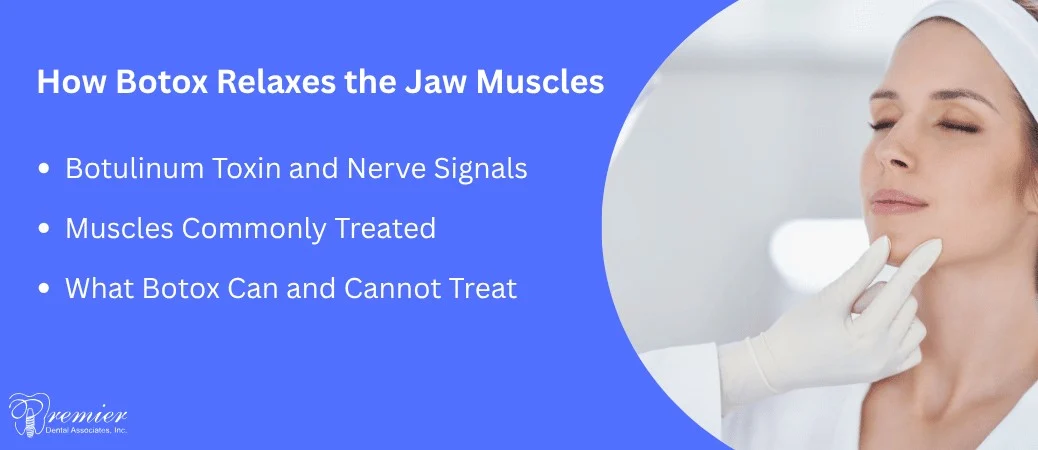
Botulinum Toxin and Nerve Signals
Botox is made from a purified form of botulinum toxin, known as botulinum toxin type A. When your provider injects it into a muscle, it blocks the release of acetylcholine.
Acetylcholine is the chemical that tells your muscles to contract. Without it, the nerve signals that cause overactive jaw muscles to contract are interrupted.
This doesn’t paralyze your jaw completely. Instead, it reduces the intensity of muscle contractions, so your jaw muscles relax without losing normal function.
You’ll usually notice results within one to two weeks. The effects tend to last three to four months before you’d need another treatment.
Muscles Commonly Treated
Botox for TMJ usually targets two main muscles in your jaw. Knowing where these muscles sit can help you understand why they’re chosen.
- Masseter muscle: This is the thick muscle on the side of your jaw that you use for chewing. It’s often the main source of tension from clenching or grinding.
- Temporalis muscle: Located near your temple, this muscle also helps you chew and close your jaw. It’s treated less often than the masseter muscles, but it can still contribute to headaches and tension.
Both muscles connect to your jaw anatomy in ways that affect how your teeth come together, also known as occlusion. When these muscles are tense, you may feel it as pain, tightness, or even trouble opening your mouth fully.
What Botox Can and Cannot Treat
Botox can offer real TMJ relief for muscle-related symptoms, but it has limits you should know about.
Here’s what Botox may help with:
- Jaw muscle pain and tension
- Clenching and teeth grinding (bruxism)
- Headaches linked to jaw muscle overuse
- Limited jaw opening caused by muscle tightness
Here’s what it typically won’t fix:
- Structural problems within the temporomandibular joint disorder itself
- Joint clicking or popping caused by disc issues
- The root cause of your TMJ symptoms
Botox works best as one part of a larger pain management plan. Your provider may also recommend a mouthguard, physical therapy, or other treatments alongside it for the best results.
Expected Benefits and What Research Shows
If you’re dealing with jaw pain, clenching, or headaches tied to TMJ disorder, Botox may offer some relief by targeting overactive jaw muscles.
That said, the science behind it is still developing, so it helps to know what the research actually supports before you decide.
Potential Relief for Clenching and Pain
Botox works by blocking nerve signals that tell your jaw muscles to contract. This can reduce the force behind clenching and grinding, which often eases the soreness that comes with TMJ disorder.
Many people notice less jaw tightness within a week or two of treatment. You might also feel improvement in your ability to open and close your mouth without discomfort.
It’s worth knowing that Botox targets muscle tension, not joint damage. So if your pain comes from disc problems or joint wear, you may need other treatments alongside it for full relief.
Headaches, Migraines, and Facial Tension
TMJ disorder often brings more than jaw pain; it can trigger tension headaches, chronic headaches, and even migraines. Since your jaw muscles connect to the muscles in your face, neck, and shoulders, tightness in one area tends to spread.
Botox for TMJ headaches works by calming this muscle activity, which may lower the frequency of tension headaches for some people.
You might also notice less neck and shoulder tension, since these areas often tighten up along with your jaw.
Results typically show up within one to two weeks and last three to four months. For people who deal with both TMJ pain and headaches, this overlap in relief can make treatment feel more worthwhile.
Limits of the Current Evidence
Right now, Botox is not officially approved for TMJ disorder. It’s considered an off-label use, meaning it’s approved for other conditions, but dentists prescribe it based on clinical experience and available research.
This research titled “Botulinum Toxin for Treating Temporomandibular Disorders” has looked at randomized controlled trials and meta-analysis data on Botox for TMJ, but results are mixed.
Some studies show clear pain relief, while others find little difference compared to placebo.
Because of this, Botox isn’t seen as a cure-all for jaw problems. It works best as one part of a larger treatment plan, often paired with physical therapy or dental care, rather than a stand-alone fix.
The Consultation, Injections, and Recovery Timeline
Getting Botox for TMJ involves a short process from start to finish. You’ll meet with a provider, get a few quick injections, and then wait a bit to feel the results.
Choosing a Qualified Provider
You should only get TMJ Botox from a licensed healthcare provider who has real experience treating jaw problems. This isn’t the same as getting Botox for wrinkles, so the person doing your injections needs extra skill.
Good options include dentists who focus on facial pain, oral surgeons, or ENT doctors. Some pain specialists also offer this treatment as part of a larger TMJ treatment plan.
At Premier Dental Associates, Dr. Rita Kutsikovich can evaluate your jaw pain, muscle tension, and other TMJ symptoms to determine which treatment approach may be appropriate for your needs.
A qualified dental provider will check your jaw muscles and ask about your symptoms before treating you. They should also explain the risks and answer your questions.
Never get Botox from someone without proper training. The CDC has warned about unsafe injections from unlicensed providers, so always check credentials first.
What Happens at a Treatment Visit
Your visit starts with your provider checking your jaw and asking about your pain. They’ll feel your jaw muscles to find the spots that are tight or overworked.
The actual botox injections are quick. Your provider will use a thin needle to place small amounts of Botox into your masseter muscle and sometimes your temporalis muscle.
These are the main muscles used for chewing and clenching.
Most visits take less than 30 minutes. You won’t need anesthesia, though your provider may use ice or a numbing cream first.
You can expect some mild discomfort during the injections, similar to a small pinch. Afterward, you can go back to your normal day right away.
When Results Start and How Long They Last
You won’t feel the results the moment you leave your appointment. It usually takes a few days to two weeks for the Botox to fully take effect.
Once it kicks in, you should notice less jaw clenching and less muscle pain. Many people also feel their jaw muscles get weaker for a while, which is normal and part of how the treatment works.
This temporary muscle weakness is what stops the muscle from overworking itself. It usually isn’t strong enough to affect eating or talking.
Results from a TMJ botox treatment typically last three to four months. After that, the effects wear off and you may need another round of injections if your symptoms return.
Risks, Safety, and Reasons to Avoid Treatment
Botox is generally safe when a licensed provider gives it to you, but it still comes with some risks you should know about.
Most side effects are mild, though rare cases can be more serious and may mean this treatment isn’t the right choice for you.

Common Temporary Side Effects
You might notice some mild reactions after your injections. These usually go away on their own within a few days.
Here’s what you may experience:
- Pain, bruising, or swelling where you got the shot
- Redness at the injection site
- Mild headache
- Flu-like feelings
- Nausea
You could also have temporary muscle weakness in your jaw. This happens because botulinum toxin blocks nerve signals to your muscles, which is how it eases your jaw tension in the first place.
This weakness typically fades as the effects wear off over a few months.
Serious Symptoms That Need Prompt Care
Some side effects are rare but need quick attention. Call your provider right away if you notice any of these.
Facial paralysis is one concern, especially if the toxin spreads beyond your jaw muscles. You might notice a drooping eyelid or an uneven smile that wasn’t there before treatment.
An allergic reaction is another risk to watch for. Signs include:
- Hives or rash
- Trouble breathing
- Swelling in your face or throat
- Dizziness
You should also know about botulism, though it’s extremely rare when Botox is given correctly. This serious condition affects your nervous system and can cause muscle paralysis.
It’s more likely to happen with counterfeit products from unlicensed providers, so always choose a qualified professional.
Health Conditions and Medication Considerations
Certain health conditions can make Botox riskier for you. If you have myasthenia gravis or another neuromuscular disorder, tell your provider before treatment.
These conditions already weaken your muscles, and Botox could make that worse.
Your medications matter too. Blood thinners can raise your risk of bruising at the injection site. Muscle relaxants might increase your chances of unwanted weakness spreading to nearby areas.
It’s also worth knowing that the FDA hasn’t approved Botox specifically for TMJ treatment. Providers use it off-label based on research and clinical experience, but you should discuss this with your doctor.
If you’re pregnant, breastfeeding, or have a history of severe jaw muscle pain linked to a structural issue rather than muscle tension, Botox may not be your best option. Talk to your provider about alternatives that fit your specific situation.
Comparing Options, Costs, and Coverage
Before you commit to Botox, it helps to know what else is out there, how Botox fits alongside other treatments, and what you can expect to pay out of pocket or through insurance.
Looking at all three angles together can help you make a choice that fits your budget and your jaw pain.
Conservative Treatments to Try First
Most doctors and dentists want you to try simpler treatments before jumping to Botox. These options are often cheaper, and some may already be covered by your insurance plan.
Common first steps include:
- Night guards or occlusal splints: These devices fit over your teeth to reduce clenching and grinding while you sleep.
- Splint therapy: A dentist adjusts how your teeth meet to ease strain on your jaw joint.
- Physical therapy: Targeted exercises can loosen tight jaw muscles and improve movement.
- Anti-inflammatory medication: Over-the-counter drugs can calm swelling and pain in the short term.
- Stress management or cognitive behavioral therapy: Since stress often triggers clenching, learning to manage it can lower symptoms.
- Arthrocentesis: This minor procedure flushes out the jaw joint to reduce inflammation in more severe cases.
When Botox Fits Into a Broader Care Plan
Botox usually comes into play after these other treatments haven’t given you enough relief.
It’s worth knowing that Botox does not have FDA approval specifically for TMJ, so your provider uses it off-label based on research showing it helps with muscle-related jaw pain.
You don’t have to choose between Botox and other TMJ pain treatment options. Many people keep using a night guard or continue physical therapy while getting Botox injections every few months.
Your dentist or doctor can help you figure out if Botox makes sense given your specific symptoms and history.
If your other treatments have already improved things somewhat, Botox may only be needed for leftover tension or pain.
Understanding Price and Insurance Coverage
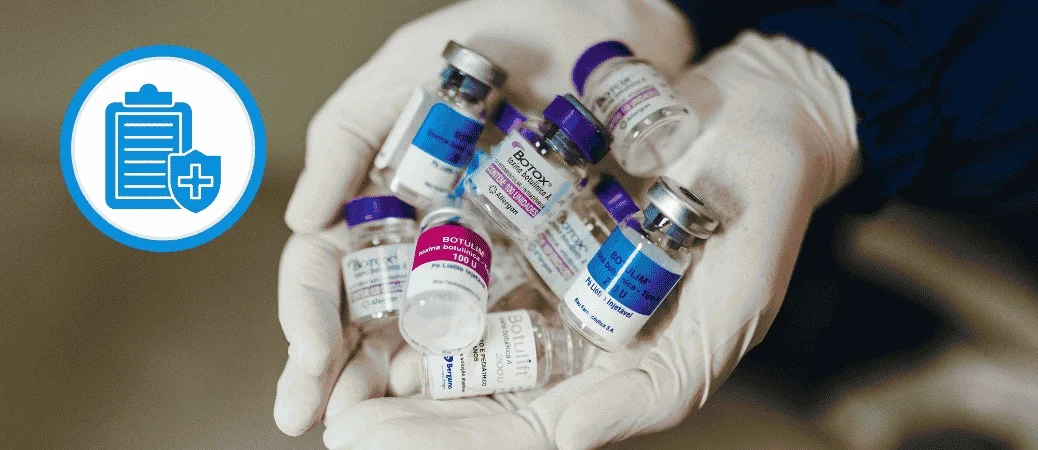
Botox for TMJ typically costs $500 to $1,500 per session, and you may need repeat treatments every three months.
Prices can shift based on how many units you need and where you live, so it helps to compare pricing details across providers before booking.
Insurance coverage varies a lot. Some plans will pay for Botox if your provider can show medical necessity, meaning you’ve tried other treatments first and they didn’t work well enough.
To improve your odds of approval, ask your provider to:
- Submit a letter of medical necessity explaining your symptoms and treatment history
- Handle any required prior authorization paperwork before your appointment
- Include records showing conservative treatments failed to help
If insurance won’t cover it, a flexible spending account or health savings account can help cover the out-of-pocket costs, as long as you have a letter of medical necessity on file.
You can also explore financing options to spread the cost into more manageable payments rather than paying the full amount upfront.
Frequently Asked Questions
Here are answers to common questions about how Botox works for TMJ, what to expect, and how long results last.
How does Botox help relieve TMJ pain and jaw tension?
Botox blocks nerve signals that tell your jaw muscles to contract. This helps your muscles relax and stop overworking.
When your jaw muscles calm down, you may notice less clenching and grinding. This can reduce jaw pain and muscle tension over time.
Botox does not fix the actual joint or bones in your jaw. It treats the muscle tightness that often causes your pain.
What results can I expect before and after Botox for TMJ?
Before treatment, you may deal with jaw pain, clicking, or trouble opening your mouth all the way. Many people also grind their teeth without knowing it.
After your injections, you probably won’t feel a difference right away. Most people notice changes within one to two weeks as the Botox starts working.
Your results will vary based on how severe your symptoms are. Some people feel major relief, while others notice smaller improvements.
Where is Botox injected for TMJ and teeth grinding?
Your provider will inject Botox into your masseter muscles. These are the large muscles on the sides of your jaw that you use for chewing.
In some cases, your provider may also inject the temporalis muscle. This muscle sits near your temple and can also add to jaw tension.
Getting Botox for TMJ takes more skill than getting it for wrinkles. It’s best to see an experienced provider like an oral surgeon or ENT for this treatment.
Can Botox for TMJ change the shape of my face or jawline?
Yes, Botox can change the shape of your jawline in some cases. This happens because relaxing your masseter muscles can make them shrink slightly over time.
If your muscles are large from years of clenching, this may create a softer, slimmer jawline. Many people see this as a helpful side effect, not a problem.
Your face shape won’t change dramatically from one treatment. Any changes tend to happen slowly after repeated sessions.
What are the possible side effects of Botox for TMJ?
Most side effects are mild and go away on their own. You might notice pain, swelling, or bruising where you got the injection.
Some people also experience headaches, nausea, or flu-like symptoms after treatment. These symptoms usually fade within a few days.
In rare cases, Botox can cause unwanted facial changes. This might include an uneven smile or drooping in nearby areas.
Always choose a licensed provider for your injections. This lowers your risk of infection or getting a counterfeit product.
How long do Botox injections for jaw tension typically last?
Botox for TMJ usually lasts three to four months per treatment. After that, your muscles slowly return to their normal activity level.
If your jaw muscles are very strong or your pain is severe, you might need injections more often. Your provider can help you figure out the right schedule for your needs.
Many people repeat treatment several times a year to keep symptoms under control. Sticking to a routine can help you maintain steady relief.